Skip to content

Your Cart

Your cart is empty

Patek - 570J - 1956
Oversized Calatrava - Original Dial
Extract from the Archives
SOLD

Lifetime Guarantee of Authenticity
Complimentary Insured Worldwide Shipping
Three-Day Inspection Window
Trusted Globally by Collectors
Patek -  570J - 1956 <br>Oversized Calatrava - Original Dial <br>Extract from the Archives <br>SOLD
Patek - 570J - 1956
Oversized Calatrava - Original Dial
Extract from the Archives
SOLD

Timepiece Information

Catalogue Notes

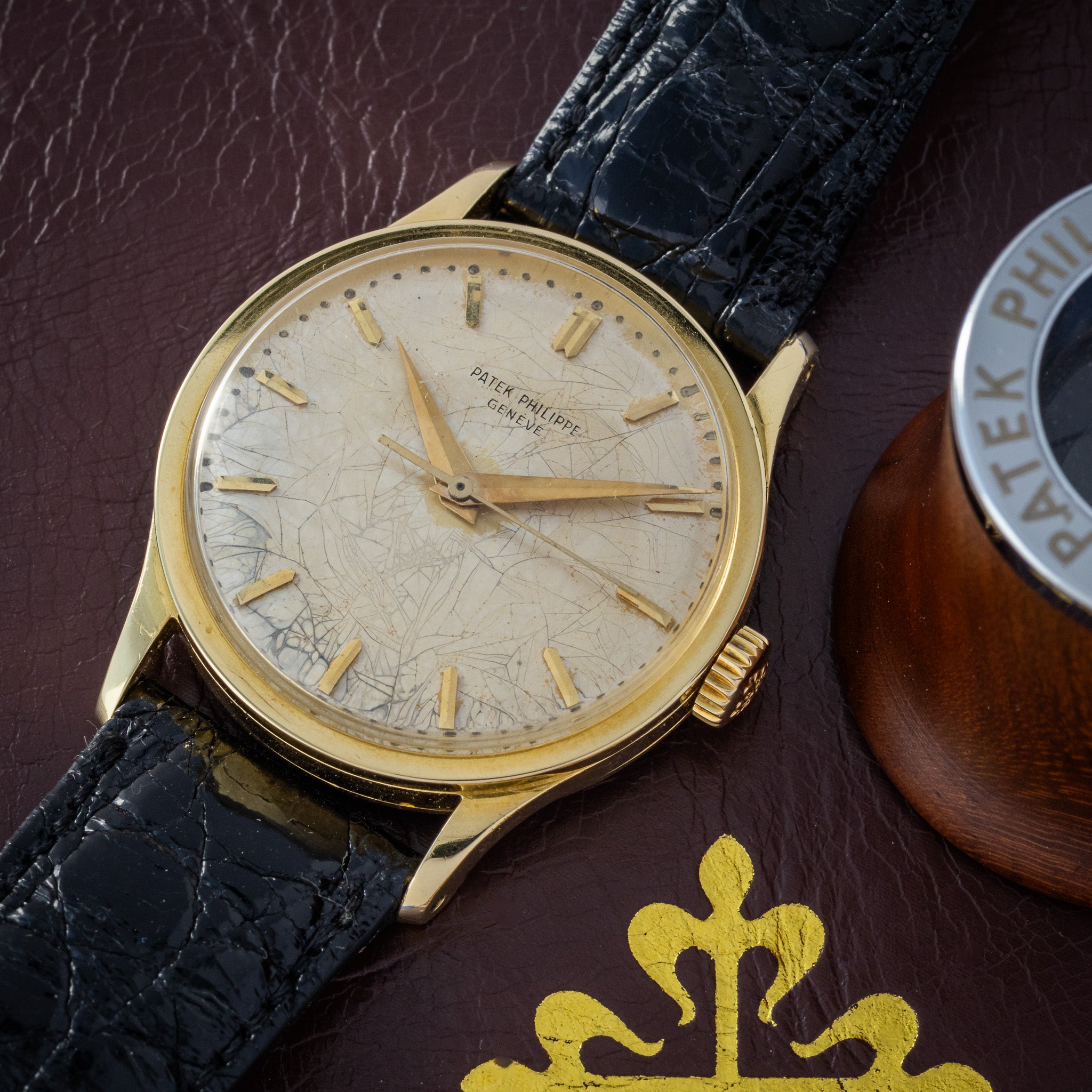
Introduced in 1938, the Patek Philippe Reference 570 represents one of the earliest large-format interpretations of the Calatrava design. With a diameter of approximately 35 millimeters—considered oversized for its era—the reference offered a more substantial presence on the wrist while maintaining the restrained elegance that defined Patek Philippe's dress watches of the period. Over the course of its long production life, the reference became one of the most recognizable mid-century expressions of the Calatrava aesthetic.


Examples produced during the 1950s frequently paired the classic round Calatrava case with applied faceted baton markers, dauphine hands, and a minimalist dial architecture that emphasized proportion and clarity. In this configuration the design remains intentionally spare, relying on balance and finishing rather than complication or ornamentation.


The present example is powered by the manually wound caliber 27SC, one of Patek Philippe's principal center-seconds movements of the mid-twentieth century. The caliber was widely employed across the manufacture's dress watches during the period and is appreciated for its reliable construction and slim architecture.


The original silvered dial displays extensive surface crazing within the protective lacquer layer, producing a web-like pattern across the dial surface consistent with the natural aging of mid-century lacquer finishes. The raised enamel Patek Philippe Genève signature remains crisp and clearly legible, and the applied hour markers appear undisturbed.


Accompanied by an Extract from the Archives confirming production in 1956 and original sale on October 3, 1957, the watch represents a characteristic example of the reference during the height of Patek Philippe's mid-century production.


Condition:
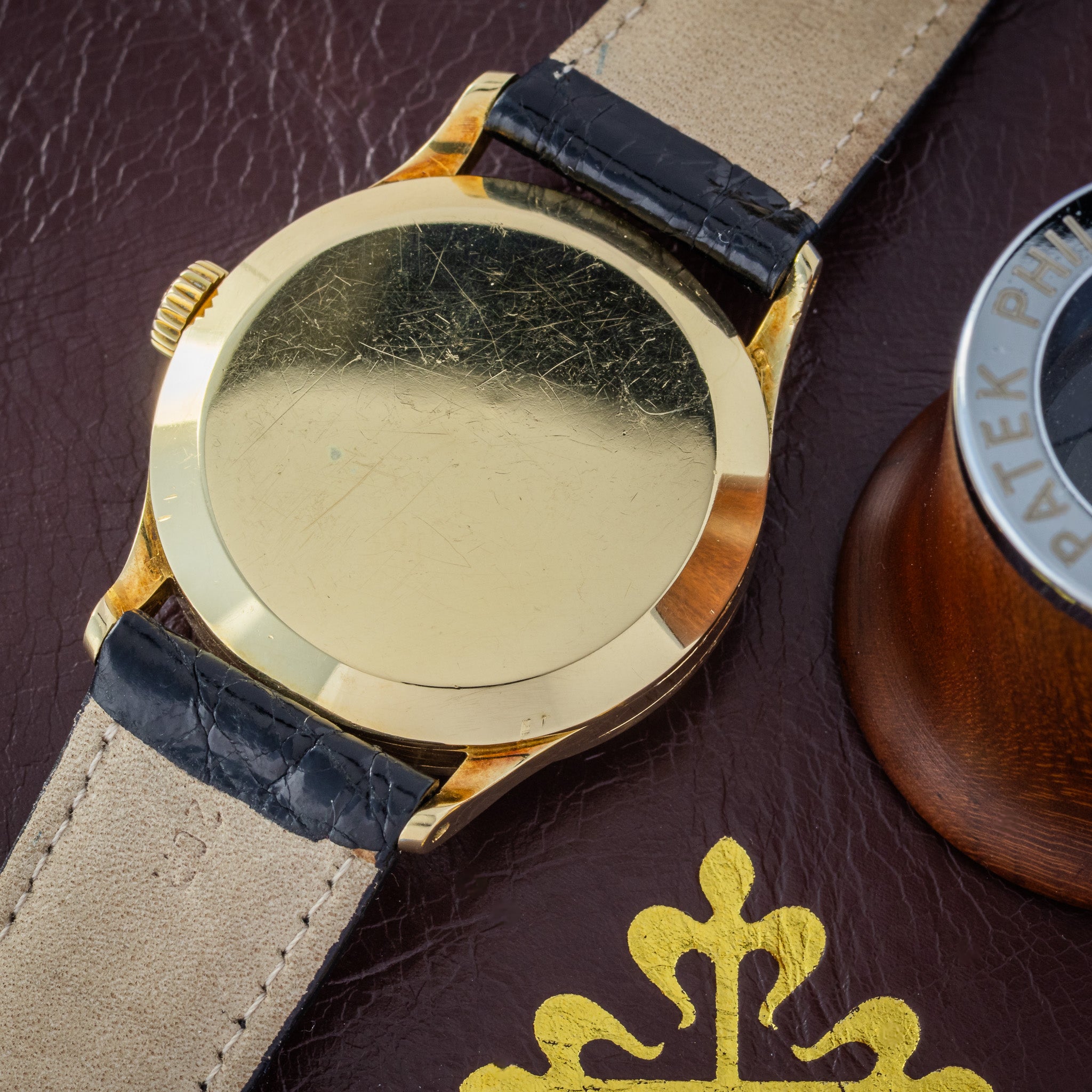
The 18k yellow gold case presents in attractive overall condition with strong remaining geometry. The crown retains clear Calatrava cross embossing, and hallmarks located on the reverse of the lugs remain visible and well defined. The case surfaces show evidence of sympathetic polishing over time. The dial displays extensive lacquer crazing consistent with natural aging, while the printed signature and applied markers remain sharp and intact.

Specifications & Accompaniments
Reference
Patek Philippe Reference 570J
Year of Production
1956
Original Date of Sale
October 3, 1957
Case Material
18k Yellow Gold
Dimensions
Diameter 35 mm, Thickness 10.95 mm, Lug to Lug 43.5 mm, Lug Width 20 mm
Dial
Original silvered dial with raised enamel PATEK PHILIPPE GENEVE signature remaining crisp and well defined
Movement
Caliber 27SC, manual wind, center seconds
Caseback
Snap-back (fond encliqueté)
Strap / Bracelet / Buckle
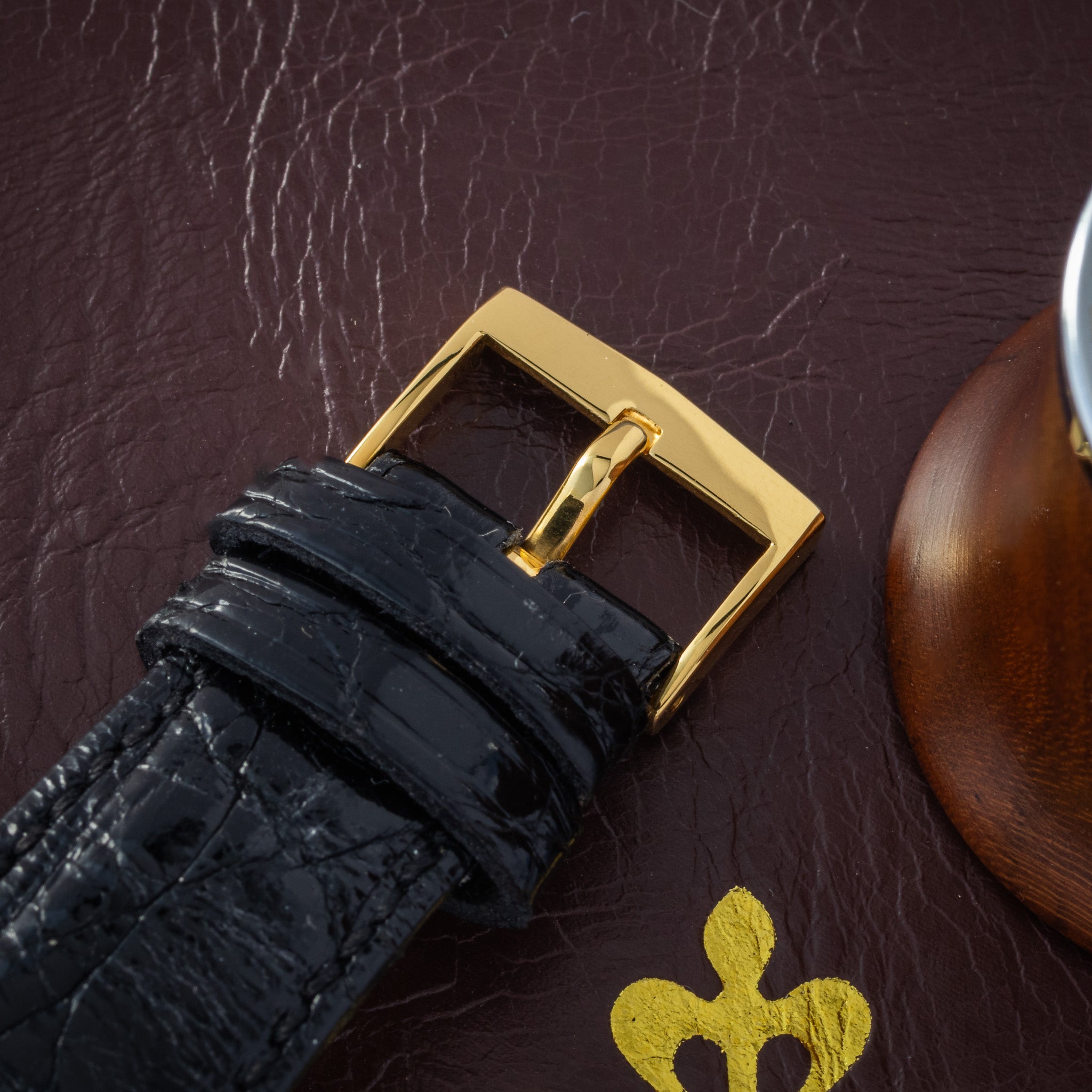
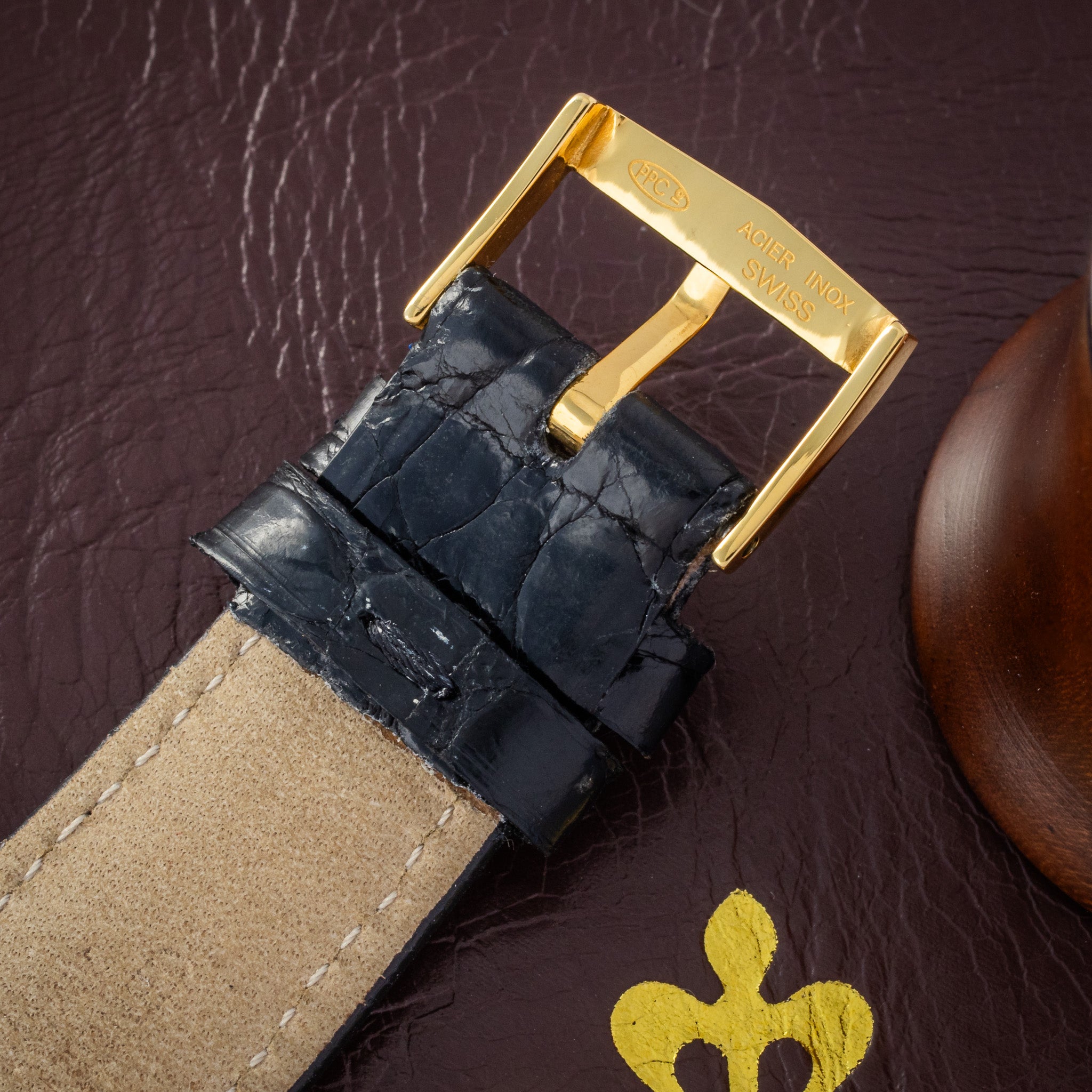
Shiny black genuine crocodile strap with stitching showing moderate wear. Aftermarket buckle bearing PPC with maker’s mark in an oval and stamped ACIER INOX SWISS, in the style of period Patek Philippe buckles.
Accompanied By
Extract from the Archives, WRISTORIAN Presentation Packaging
WRISTORIAN Perspective
The Patek Philippe Reference 570 occupies a distinctive place within the Calatrava lineage. Introduced in 1938 as an enlarged interpretation of the earlier Reference 96, the model brought a more assertive presence to Patek Philippe’s otherwise restrained dress watch vocabulary. At approximately 35 millimeters in diameter—a generous size for the period—the watch offered a modern scale while preserving the balanced proportions that define the Calatrava tradition.

Collectors would later refer to the model affectionately as the “Calatravone,” a nickname that acknowledges both its dimensions and its quiet authority. The design language is pure mid-century Patek Philippe: slender lugs extending cleanly from the case, faceted baton markers, and sharply cut dauphine hands arranged across a dial whose elegance derives from restraint rather than embellishment. In this form the watch expresses a philosophy central to the manufacture’s identity—that refinement in horology is often achieved not through complication, but through proportion, clarity, and disciplined design.

The present example illustrates another reality familiar to collectors of mid-century Patek Philippe: the passage of time leaves visible traces on original lacquered dials. Here the protective lacquer layer has developed extensive crazing across the silvered surface, forming a delicate network of fine lines that has emerged naturally over decades. While visually distinctive, this pattern reflects the aging behavior commonly encountered in lacquer finishes of the era and remains consistent with originality. The enamel signature remains crisp, the applied markers retain their sharp geometry, and the watch continues to convey the honest character that defines many carefully preserved vintage pieces.

For collectors drawn to the understated authority of Patek Philippe’s mid-century designs, the Reference 570 remains one of the most enduring expressions of the Calatrava form. Its proportions feel remarkably contemporary even today, while the manual-wound architecture and disciplined dial preserve the intellectual purity of the original concept. Examples that retain their original components and authentic character offer a particularly compelling connection to the era in which they were made—an era when elegance in watchmaking was defined less by complexity than by proportion, craftsmanship, and time itself.
Service & Operation
Service History
Serviced September 27, 2025
Operational Status
Observed running and setting normally at the time of cataloguing. The movement has not been tested for accuracy over extended periods or for power reserve duration, and may require servicing at the buyer’s discretion. As is customary with vintage timepieces, future performance cannot be guaranteed.