
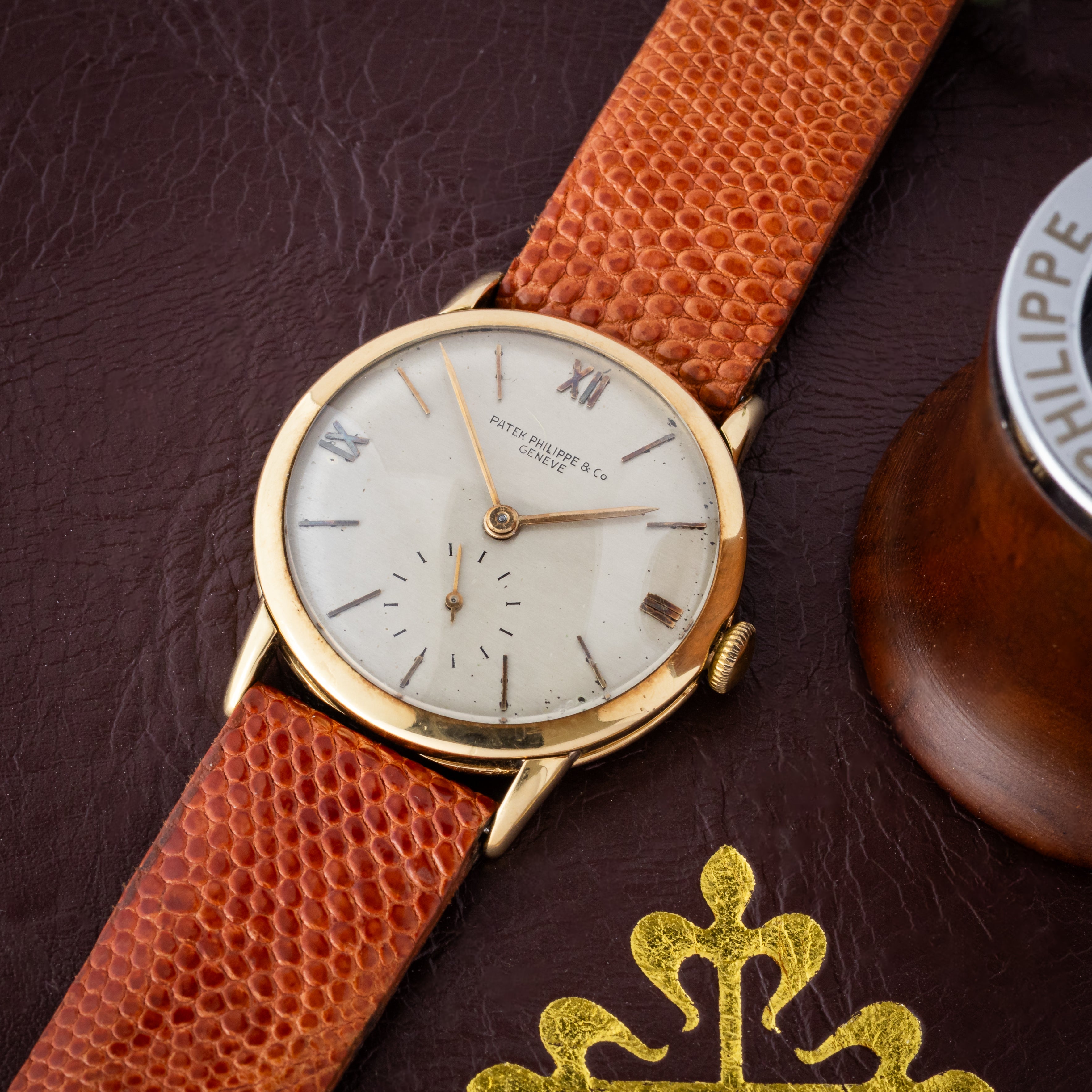
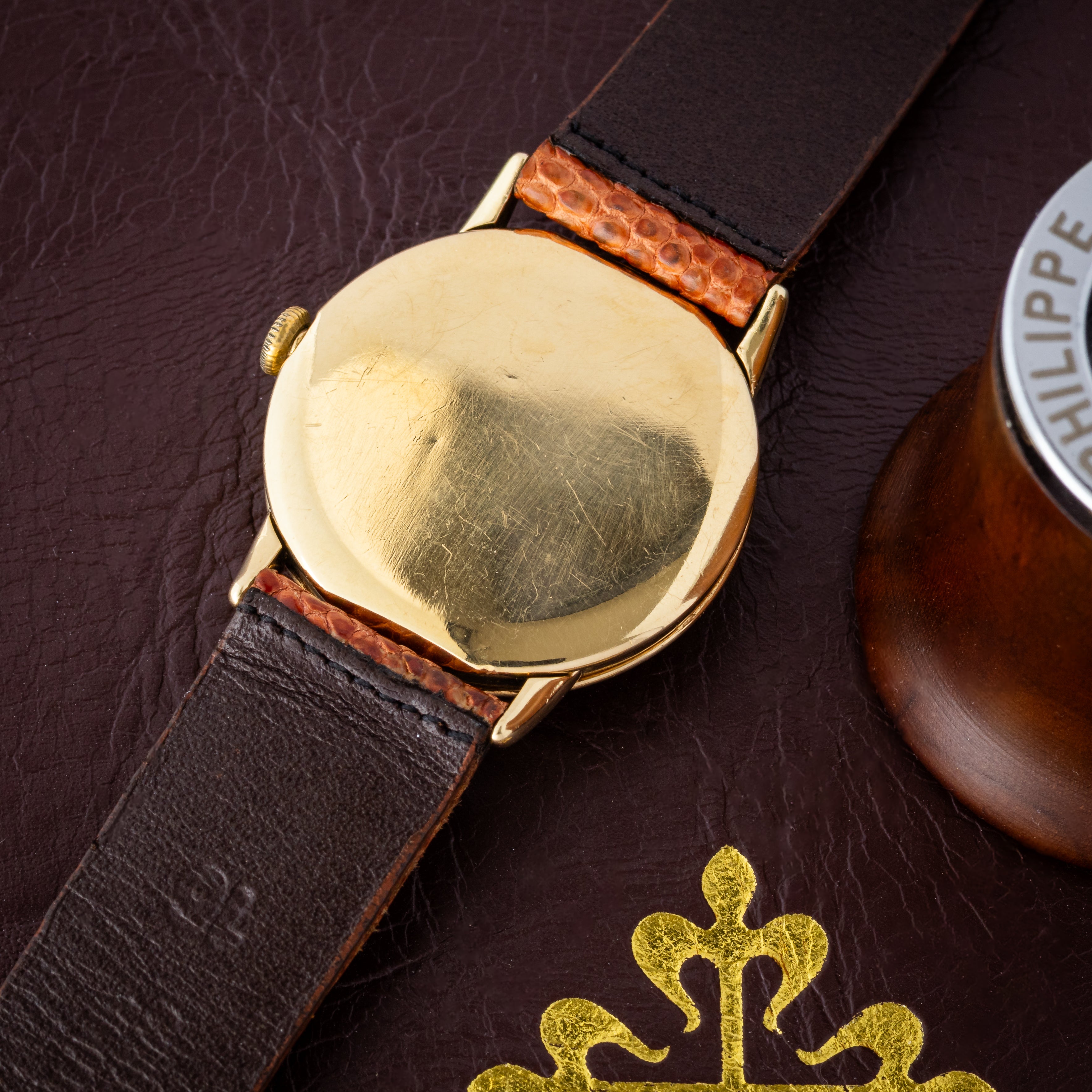
Patek Philippe Ref. 1433J with Long Signature, circa 1939–1946
 Trusted Globally by Collectors
Lifetime Guarantee of Authenticity
Condition Clearly Documented
Complimentary Fully Insured U.S. Shipping
Fully Insured International Shipping Quoted
Trusted Globally by Collectors
Lifetime Guarantee of Authenticity
Condition Clearly Documented
Complimentary Fully Insured U.S. Shipping
Fully Insured International Shipping Quoted
Choose options
Timepiece Information
Patek Philippe Reference 1433J, manufactured circa 1939–1946, in 18K yellow gold.
Silvered opaline dial with raised "Patek Philippe & Co." long signature. Roman numerals at 12, 3, and 9 are complemented by applied baton markers at the remaining hours. The dial omits a peripheral minute track, leaving the surface largely uninterrupted. A subsidiary seconds register is positioned at 6 o'clock.
The yellow gold case exhibits proportions typical of smaller Calatrava-era wristwatches of the late 1930s and early 1940s. The case interior bears stamp 620-471 and retains period hallmarks consistent with Geneva manufacture during the era.
Manually wound calibre 9-90.
Condition: The watch presents in well-preserved vintage condition, showing honest surface wear consistent with age and careful stewardship. The dial retains the balanced appearance characteristic of period silvered opaline examples.
What makes the 1433 increasingly compelling today is its refusal to conform to modern expectations of wrist presence. Its scale demands intention from the wearer. It is not a generalist reference, nor was it designed to be one. It represents an era when dress watches were intimate instruments — personal, discreet, and architecturally resolved.
The long “Patek Philippe & Co.” signature anchors the watch within a narrow historical window when typography still carried partnership-era language. For collectors attentive to these subtleties, such details signal historical placement without requiring explanation.
The caliber 9-90 further reinforces the reference’s integrity. Properly scaled and mechanically conservative, it reflects Patek Philippe’s commitment to proportion during a time when supply constraints could easily have encouraged compromise.
The present example should be evaluated through that lens of coherence. The clarity of its raised signature, the preservation of its dial architecture, and the structural integrity of its case allow the reference’s design discipline to remain legible. The movement and case components appear consistent with the era, supporting the overall alignment that defines stronger surviving examples. Within a category where proportion is the primary virtue, this example retains the compositional balance that gives the Ref. 1433 its enduring relevance.

