

Patek - 565J-SCI
Hacia 1953 · Caja n.° 677.778 · Movimiento n.° 702.775 · Solo hora. Un ejemplar cuidadosamente seleccionado por su equilibrio entre originalidad y honestidad, esta pieza refleja el atractivo perdurable del lenguaje de diseño de mediados de siglo de Patek Philippe. Sus proporciones se adaptan con elegancia a la muñeca, mientras que la fina tipografía de la esfera y el acabado de la caja subrayan la discreta búsqueda de la excelencia de la manufactura. Los coleccionistas apreciarán la integridad de sus componentes y la sobria elegancia que lo eleva por encima de la moda: un objeto funcional refinado en forma. En el mercado actual, los conocedores valoran estos ejemplares por su coherencia y la claridad de su historia: un reloj con propósito, conservado con respeto en lugar de excesos. Adecuado para el uso diario o para un estudio minucioso en una colección selecta, ofrece tanto satisfacción estética como un gran valor como pieza de colección a largo plazo. Incluye la opción de solicitar.
Patek - 565J-SCI
 Lifetime Guarantee of Authenticity
Complimentary Insured Worldwide Shipping
Returns Permitted If Not as Described
Trusted Globally by Collectors
Lifetime Guarantee of Authenticity
Complimentary Insured Worldwide Shipping
Returns Permitted If Not as Described
Trusted Globally by Collectors
Elige opciones
Patek - 565J-SCI
Precio de oferta$65,000.00
Timepiece Information
Catalogue Notes
Specifications & Accompaniments
Reference
Patek Philippe Reference 565J
Year of Production
1953, as confirmed by the Extract from the Archives
Original Date of Sale
August 27, 1954
Case Material
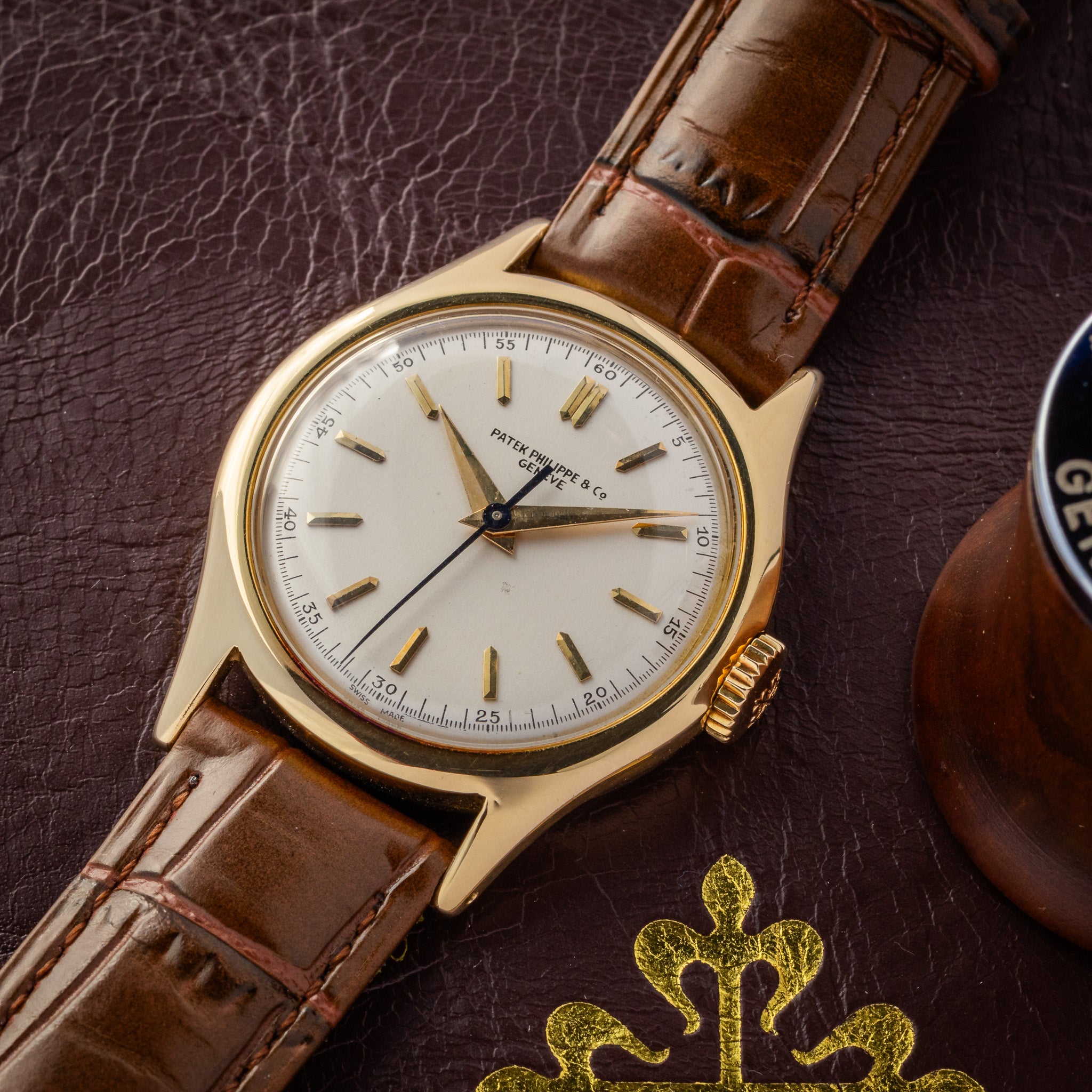
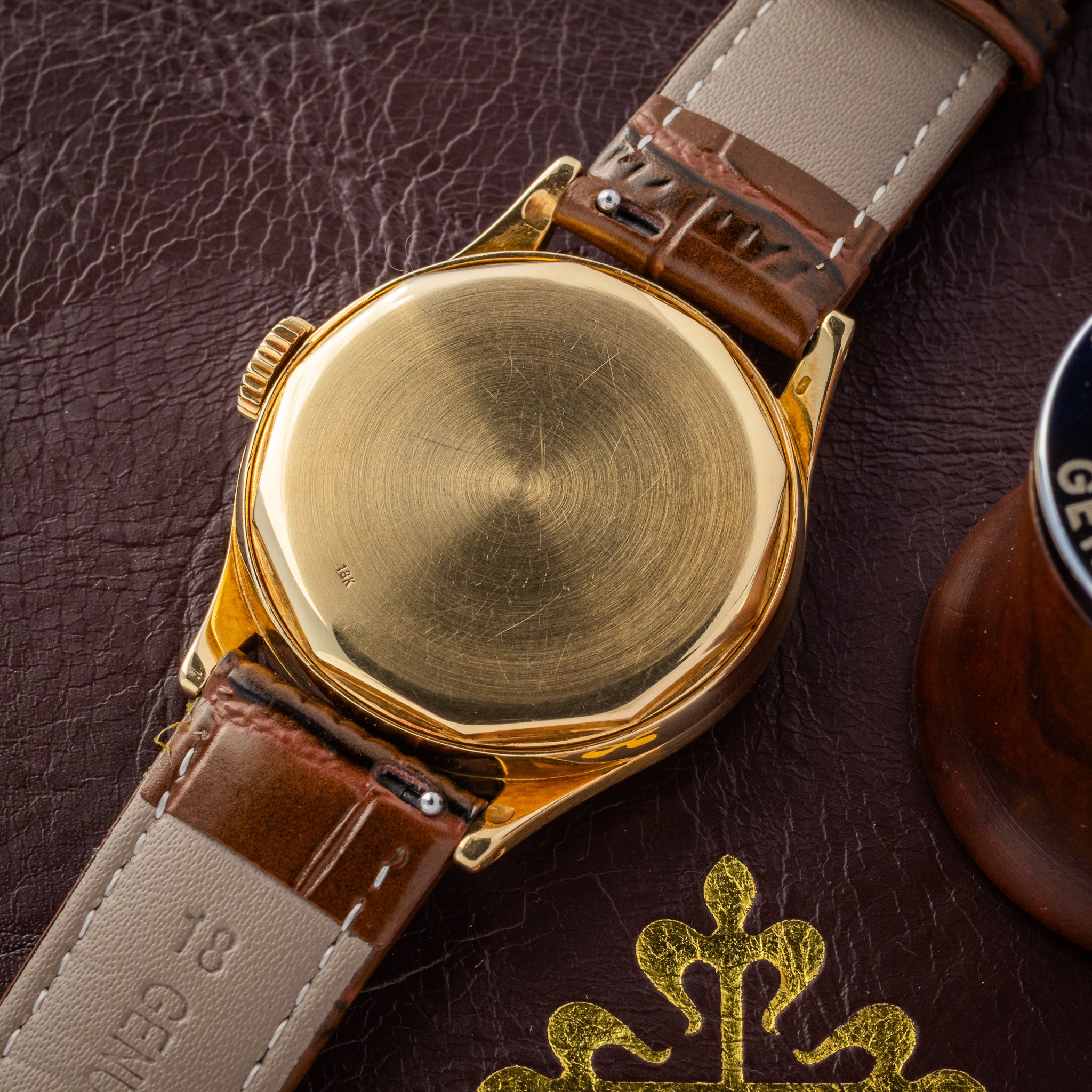
18K Yellow Gold
Dimensions
35 mm diameter; approximately 10.3 mm thickness; 18 mm lug width; approximately 42 mm lug-to-lug span
Dial
Silvered dial with raised enamel long signature “Patek Philippe & Co Geneve,” applied yellow gold hour markers, outer minute track with Arabic five-minute markers, fitted with dauphine hands and a blued steel sweep center seconds hand
Movement
Patek Philippe Caliber 27SC, manually wound movement with sweep center seconds
Caseback
Decagonal screw-back case (fond vissé) typical of the Reference 565
Strap / Bracelet / Buckle
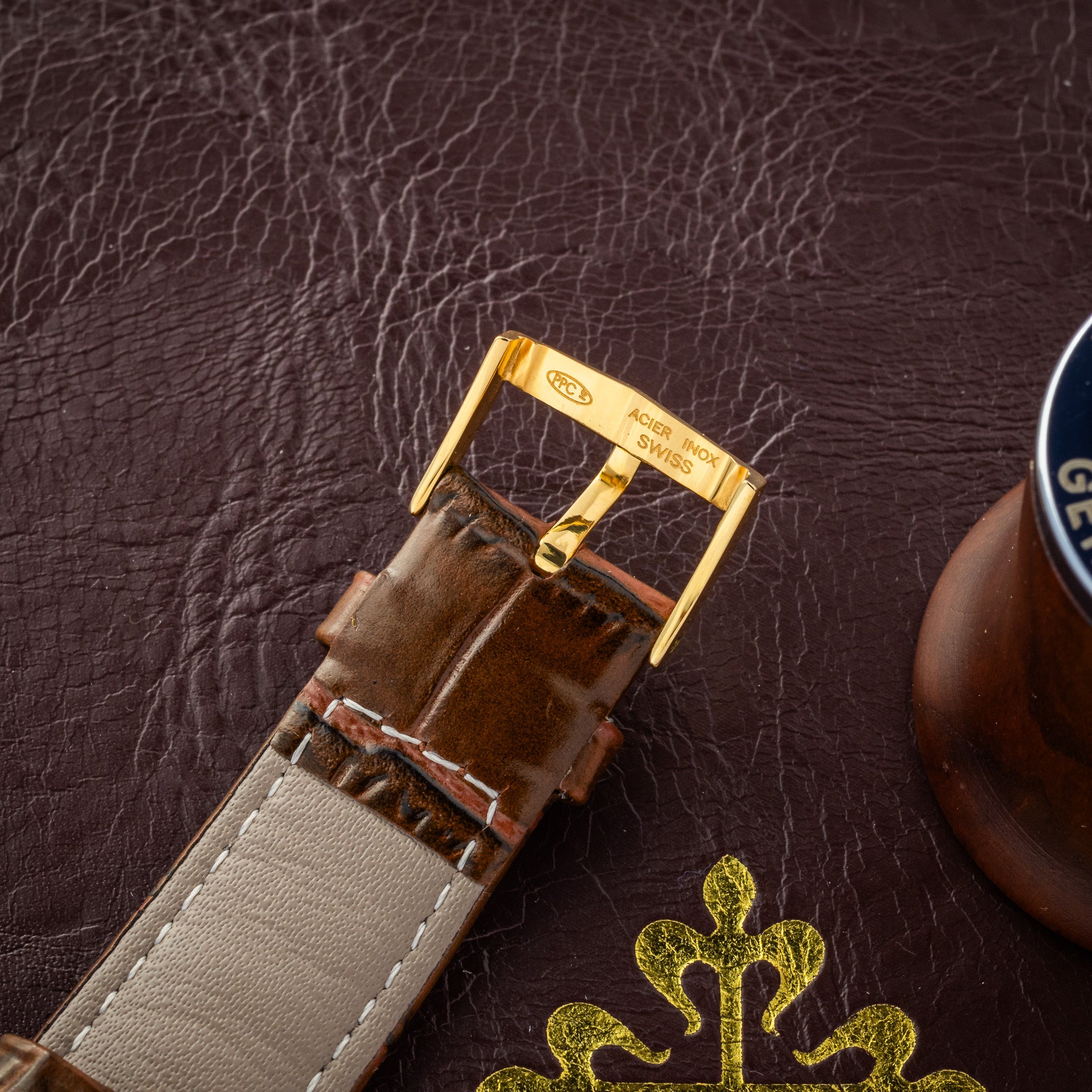
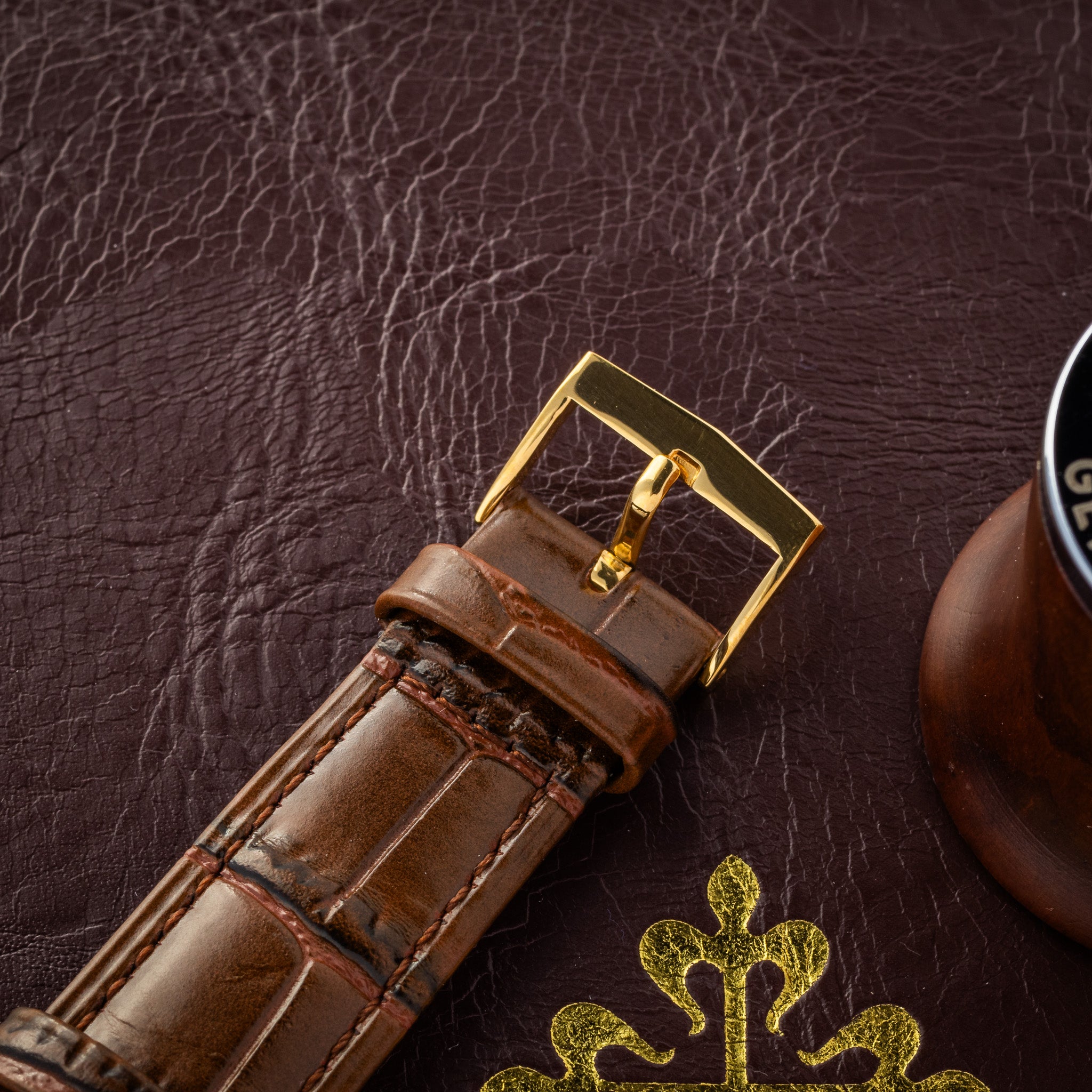
Brown matte alligator-embossed leather strap in very attractive, lightly worn condition; fitted with a gold-tone pin buckle stamped INOX SWISS with PPC maker’s mark
Accompanied By
Extract from the Archives and WRISTORIAN presentation packaging
WRISTORIAN Perspective
Certain references define a brand’s identity. For Patek Philippe, the Reference 565 belongs firmly in that category.
When the model appeared in 1938, the wristwatch was still evolving from a delicate accessory into a practical daily instrument. Many watches of the era remained modest in scale and relatively fragile in construction. The Reference 565 quietly changed that equation. With its larger proportions and screw-back case architecture, it introduced a new level of structural confidence to the Patek Philippe catalogue while preserving the disciplined elegance associated with the Calatrava line.
What makes the reference particularly compelling today is how modern it still feels. At 35 millimeters, the watch was considered oversized when introduced. In an era when many wristwatches measured closer to 30 millimeters, the 565 would have appeared bold and progressive. Decades later, those same proportions feel remarkably balanced. On the wrist the watch possesses presence without excess, maintaining the refined restraint collectors associate with mid-century Patek Philippe design.
The architecture of the case reinforces that impression. Produced by the renowned Geneva casemaker C.R. Spillmann & Co., the slightly thicker waterproof case, broad bezel, and slender tapering lugs create a silhouette that feels both purposeful and elegant. Spillmann’s work would later house some of the manufacture’s most celebrated references, but the 565 represents one of the earliest expressions of this robust case engineering within a time-only Patek Philippe wristwatch.
By the early 1950s the reference had also embraced the sweep center seconds layout that collectors now recognize as the modern wristwatch standard. Earlier wristwatches commonly relied on subsidiary seconds registers, but the centrally mounted seconds hand offered greater visual clarity and a more contemporary presentation of time. In watches such as the present example, this development reflects the moment when traditional Genevan watchmaking began aligning with the practical expectations of everyday wristwear.
The dial of this example introduces another element that collectors immediately recognize. The elongated raised enamel “Patek Philippe & Co Geneve” long signature belongs to a narrow chapter in the manufacture’s dial typography. Executed in hard enamel and engraved into the dial surface, the signature retains a crisp permanence that later printed dials rarely match. Combined with the applied gold markers, dauphine hands, and finely articulated minute track, the dial presents a composition that rewards close inspection while remaining visually calm on the wrist.
Worn today, the Reference 565 reveals why the model has remained so respected among collectors of vintage Patek Philippe. The watch sits comfortably, the proportions feel balanced, and the slightly more substantial case construction gives it a sense of durability uncommon among many dress watches of its era. The drilled lugs and practical design details further reinforce the impression that this was conceived not merely as a formal object, but as a watch intended to be worn.
Within the broader landscape of Patek Philippe wristwatches, the Reference 565 occupies a foundational position. The model sits at the intersection of several developments that would shape the modern wristwatch: early water-resistant case construction, the emergence of larger case proportions, and the growing preference for sweep center seconds displays. For this reason, many collectors view the reference as an essential chapter in the evolution of Patek Philippe’s mid-century wristwatches. In examples such as the present watch—combining the sweep center seconds configuration with the elongated raised enamel “Patek Philippe & Co Genève” long signature—the reference reveals the qualities that have long made the 565 a cornerstone of serious vintage Patek Philippe collections.
When the model appeared in 1938, the wristwatch was still evolving from a delicate accessory into a practical daily instrument. Many watches of the era remained modest in scale and relatively fragile in construction. The Reference 565 quietly changed that equation. With its larger proportions and screw-back case architecture, it introduced a new level of structural confidence to the Patek Philippe catalogue while preserving the disciplined elegance associated with the Calatrava line.
What makes the reference particularly compelling today is how modern it still feels. At 35 millimeters, the watch was considered oversized when introduced. In an era when many wristwatches measured closer to 30 millimeters, the 565 would have appeared bold and progressive. Decades later, those same proportions feel remarkably balanced. On the wrist the watch possesses presence without excess, maintaining the refined restraint collectors associate with mid-century Patek Philippe design.
The architecture of the case reinforces that impression. Produced by the renowned Geneva casemaker C.R. Spillmann & Co., the slightly thicker waterproof case, broad bezel, and slender tapering lugs create a silhouette that feels both purposeful and elegant. Spillmann’s work would later house some of the manufacture’s most celebrated references, but the 565 represents one of the earliest expressions of this robust case engineering within a time-only Patek Philippe wristwatch.
By the early 1950s the reference had also embraced the sweep center seconds layout that collectors now recognize as the modern wristwatch standard. Earlier wristwatches commonly relied on subsidiary seconds registers, but the centrally mounted seconds hand offered greater visual clarity and a more contemporary presentation of time. In watches such as the present example, this development reflects the moment when traditional Genevan watchmaking began aligning with the practical expectations of everyday wristwear.
The dial of this example introduces another element that collectors immediately recognize. The elongated raised enamel “Patek Philippe & Co Geneve” long signature belongs to a narrow chapter in the manufacture’s dial typography. Executed in hard enamel and engraved into the dial surface, the signature retains a crisp permanence that later printed dials rarely match. Combined with the applied gold markers, dauphine hands, and finely articulated minute track, the dial presents a composition that rewards close inspection while remaining visually calm on the wrist.
Worn today, the Reference 565 reveals why the model has remained so respected among collectors of vintage Patek Philippe. The watch sits comfortably, the proportions feel balanced, and the slightly more substantial case construction gives it a sense of durability uncommon among many dress watches of its era. The drilled lugs and practical design details further reinforce the impression that this was conceived not merely as a formal object, but as a watch intended to be worn.
Within the broader landscape of Patek Philippe wristwatches, the Reference 565 occupies a foundational position. The model sits at the intersection of several developments that would shape the modern wristwatch: early water-resistant case construction, the emergence of larger case proportions, and the growing preference for sweep center seconds displays. For this reason, many collectors view the reference as an essential chapter in the evolution of Patek Philippe’s mid-century wristwatches. In examples such as the present watch—combining the sweep center seconds configuration with the elongated raised enamel “Patek Philippe & Co Genève” long signature—the reference reveals the qualities that have long made the 565 a cornerstone of serious vintage Patek Philippe collections.
Service & Operation
Service History
Serviced March 25, 2025
Operational Status
Observed running and setting normally at the time of cataloguing. The movement has not been tested for accuracy over extended periods or for power reserve duration, and may require servicing at the buyer’s discretion. As is customary with vintage timepieces, future performance cannot be guaranteed.
