
Patek Philippe Ref. 5136/1J First-Year Perpetual Calendar, 2003
 Trusted Globally by Collectors
Lifetime Guarantee of Authenticity
Complimentary Fully Insured Shipping
Trusted Globally by Collectors
Lifetime Guarantee of Authenticity
Complimentary Fully Insured Shipping
Choose options
Timepiece Information
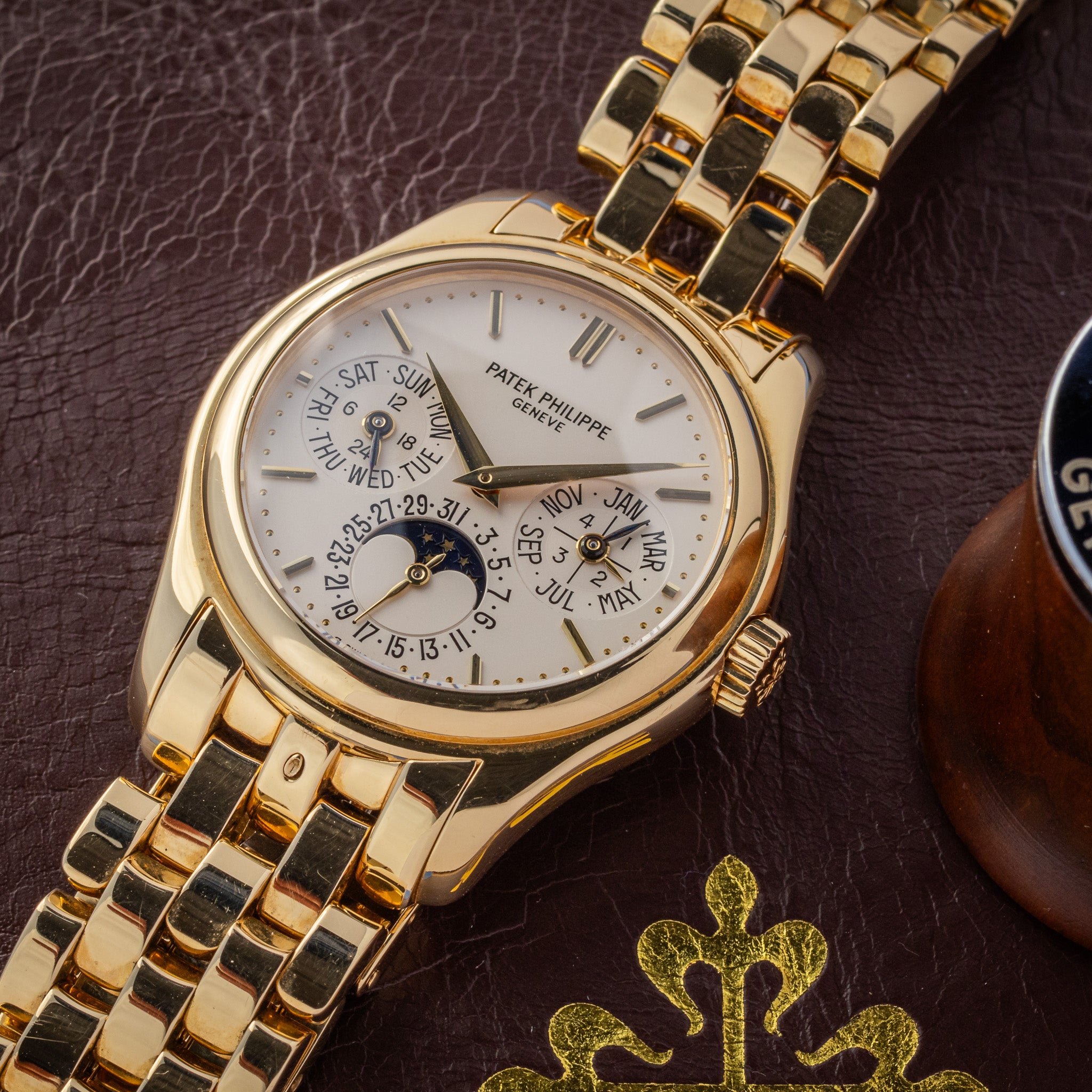
The Patek Philippe Reference 5136/1J is a self-winding perpetual calendar wristwatch introduced in 2003 as part of the manufacture's long-standing lineage of perpetual calendar timepieces powered by the ultra-thin Caliber 240Q. The reference occupies a distinctive position within this lineage, appearing chronologically between the long-running Reference 3940, introduced in 1985, and the Reference 5140, introduced in 2006. All three references employ the same perpetual calendar architecture based on Patek Philippe's Caliber 240 with integrated micro-rotor.
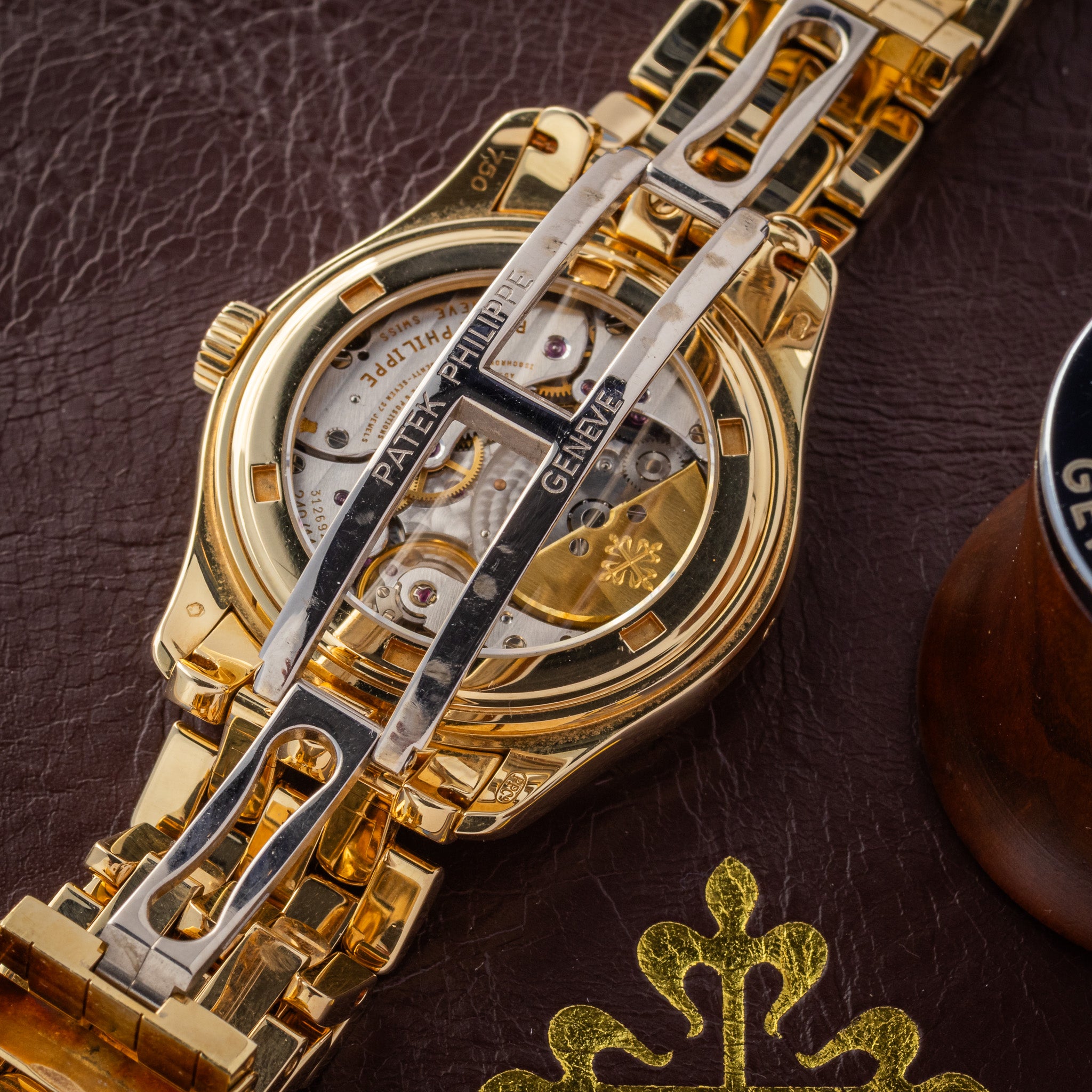
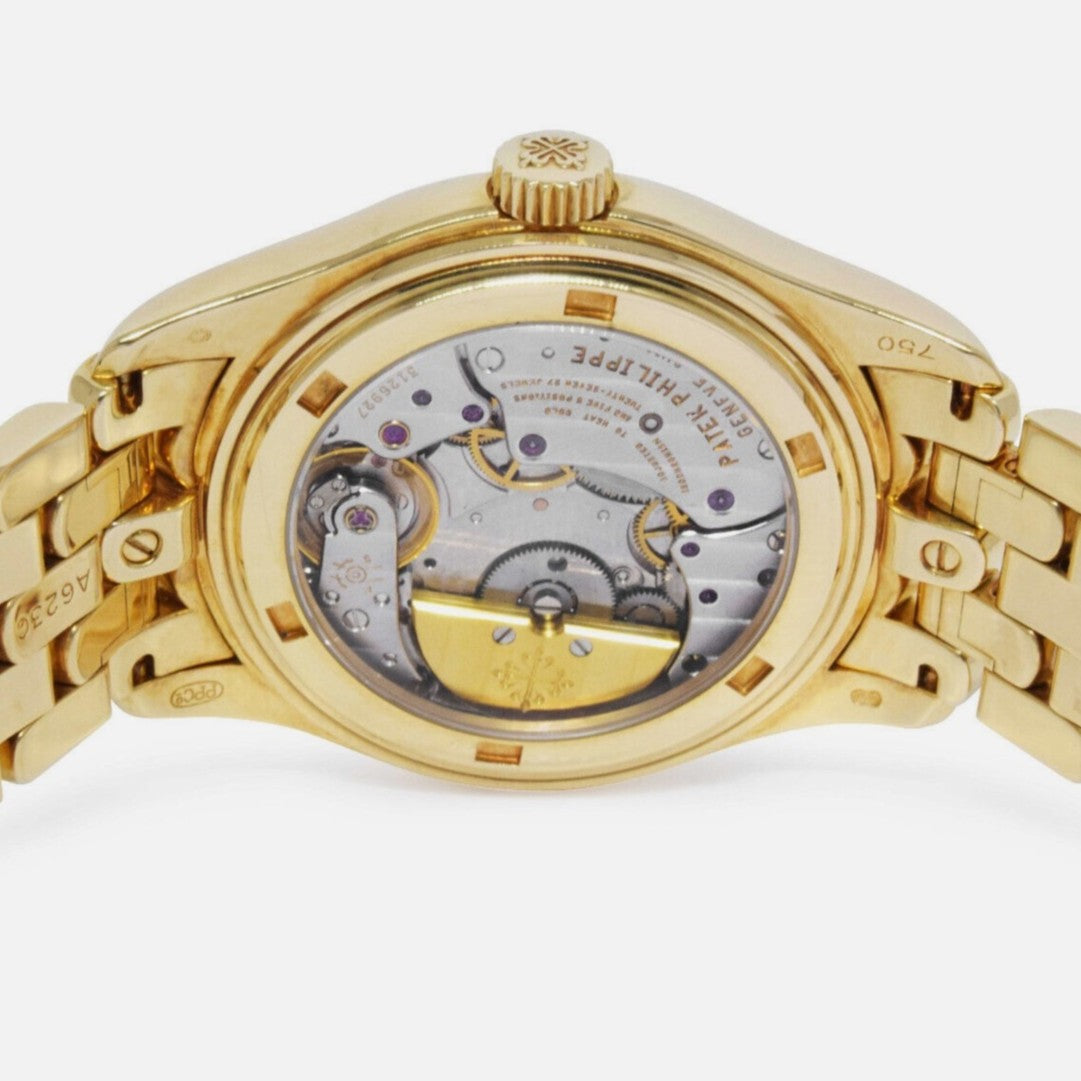
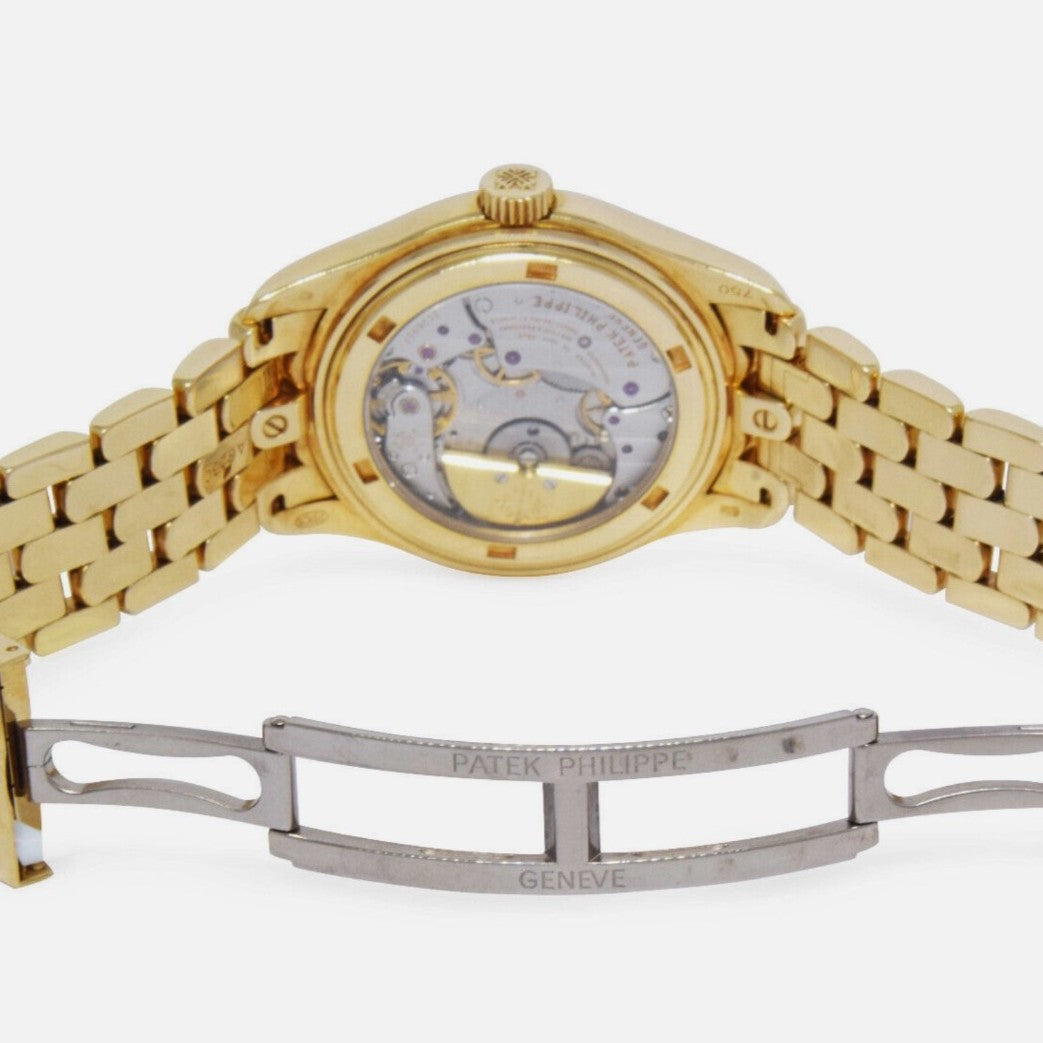
The watch is powered by Caliber 240Q, an ultra-thin self-winding movement incorporating a recessed 22k gold micro-rotor integrated into the movement plate. This construction allows the perpetual calendar mechanism to be housed within a notably slender movement architecture while preserving the classical three-register calendar display. The caliber provides indications for day, date, and month, along with leap-year indication, 24-hour display, and moon phases. The movement carries the Geneva Seal, reflecting the finishing and construction standards historically applied to movements produced within the Canton of Geneva prior to the introduction of the Patek Philippe Seal in 2009. The movement is visible through the sapphire exhibition caseback.
The dial is executed in opaline silver and fitted with applied yellow gold baton hour markers and dauphine hands. The perpetual calendar indications follow the traditional Patek Philippe arrangement with the day and 24-hour indication at nine o'clock, the month with leap-year display at three o'clock, and the date with moon-phase display at six o'clock. This configuration reflects the layout established by the Reference 3940 and maintained across subsequent perpetual calendar models using the 240Q movement.
Reference 5136/1J is distinguished by its integrated 18k yellow gold bracelet, which forms a continuous extension of the case architecture. In contrast to most perpetual calendar references produced by Patek Philippe during the late twentieth and early twenty-first centuries, which were typically delivered on leather straps, the 5136 was conceived as a bracelet-configured model. The bracelet integrates directly into the case and is secured by a concealed double-fold deployant clasp signed Patek Philippe Genève.
The case measures approximately 36.6 millimeters in diameter with a thickness of approximately 10.1 millimeters. Despite the mechanical complexity of the perpetual calendar mechanism, the watch maintains relatively restrained proportions due to the thin construction of the Caliber 240Q. The present example was manufactured in 2003 and sold on February 9, 2004, as confirmed by the Extract from the Archives. This places the watch within the first year of production for the reference.
Close inspection reveals strong and well-preserved hallmarks on the reverse of all four lugs, indicating that the case retains crisp definition consistent with careful preservation. The integrated bracelet remains correct to the reference and retains its original Patek Philippe clasp.
Production of the Reference 5136 spanned a relatively brief period during the early 2000s before the model was discontinued later in the decade. While Patek Philippe does not publish official production figures, the reference remained in the catalogue for only a limited number of years and represents a comparatively short production run within the broader history of the manufacture's perpetual calendar wristwatches.
Condition: The watch presents in excellent overall condition with minimal visible wear. The case retains crisp geometry and strong hallmarks on the reverse of all four lugs. The opaline dial remains clean and well preserved with sharp printing and intact applied markers. The integrated yellow gold bracelet remains structurally sound and visually attractive. Observed running and setting normally at the time of cataloguing.
What distinguishes the 5136 within that lineage is its construction. Rather than presenting the perpetual calendar as a traditional dress watch on leather, Patek Philippe designed the reference around a fully integrated yellow gold bracelet. The bracelet is not an accessory but an extension of the case itself, giving the watch a continuous architectural profile that differs meaningfully from the more conventional strap-mounted perpetual calendars that preceded and followed it. Within the broader catalogue of Patek Philippe complications, bracelet-configured perpetual calendars remain relatively uncommon, which gives the reference a distinct identity among collectors studying the evolution of the manufacture’s calendar watches.
Despite the added presence of a full gold bracelet, the watch retains the refined proportions that define Patek Philippe’s perpetual calendar lineage. The case diameter remains just under 37 millimeters, and the ultra-thin Caliber 240Q keeps the overall profile controlled and elegant. The recessed 22k gold micro-rotor allows the movement to remain remarkably slim for a perpetual calendar, preserving the disciplined case thickness that collectors have long associated with Patek Philippe’s classical complicated wristwatches.
On the wrist, these proportions produce a result that can be surprising even to seasoned collectors. While bracelet watches are often assumed to feel heavier or more imposing than strap-mounted counterparts, the integrated design distributes the weight evenly across the wrist. The bracelet’s articulation and geometry allow the watch to settle comfortably into place, creating a balanced feel that differs from many traditional dress watches. Even collectors who typically favor leather straps often find that the 5136 wears with an ease and stability that quickly becomes appealing during daily wear.
The dial reflects the visual discipline that has long defined Patek Philippe perpetual calendars. The opaline surface provides a restrained backdrop for the classical three-register layout, while the applied yellow gold markers and dauphine hands maintain clarity across a dial that carries a considerable amount of information. The arrangement of day, date, month, leap year, 24-hour indication, and moon phases follows the architectural template established in the 3940—one of the most enduring perpetual calendar layouts in modern watchmaking.
For collectors studying the early years of the twenty-first century, the Reference 5136 has gradually gained recognition as part of an important transitional period in Patek Philippe’s production. The model represents one of the final bracelet-configured perpetual calendars built around the classic Caliber 240Q before the brand’s complication portfolio continued to evolve in the years that followed. With its relatively brief production run and its position between two major perpetual calendar references, the 5136 today offers insight into a moment when Patek Philippe was refining its complications while remaining firmly anchored in the aesthetic discipline that had defined the manufacture for generations.
In that sense, the watch reflects a particular philosophy of complicated watchmaking: one in which technical sophistication, refined proportions, and everyday usability coexist without unnecessary spectacle. The integrated bracelet, the ultra-thin micro-rotor movement, and the classical perpetual calendar display combine to produce a watch that feels both technically accomplished and quietly wearable. For collectors who appreciate the subtle evolution of Patek Philippe’s calendar watches, the Reference 5136/1J represents a thoughtful expression of that lineage—an object that rewards close study while remaining remarkably comfortable in daily use.

