

Patek - 1433J - Signature longue
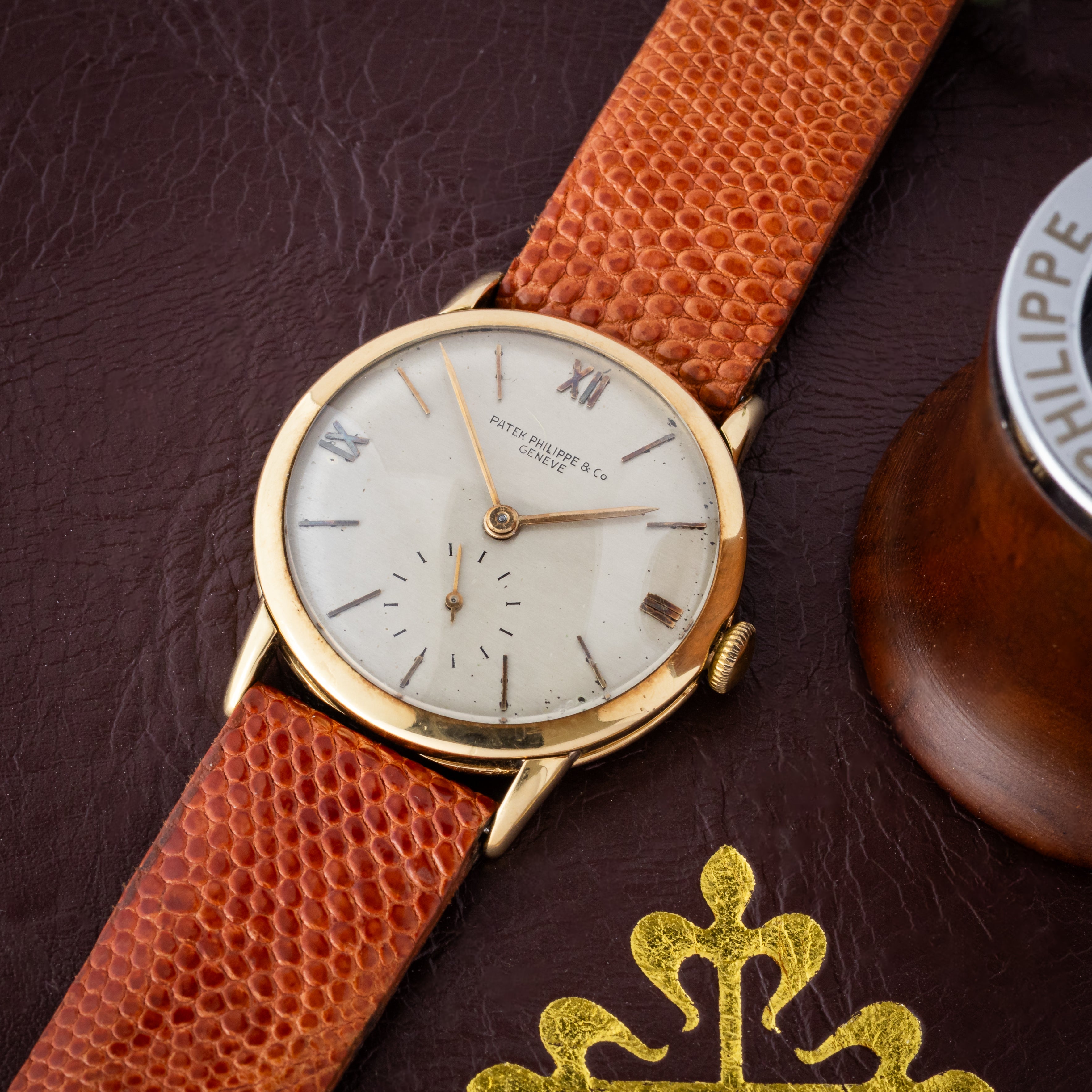
Vers 1939-46 ? · Boîtier n° 620.471 · Mouvement n° 900.199. Heure uniquement. Ce modèle, choisi pour son équilibre entre originalité et authenticité, témoigne de l'attrait intemporel du design Patek Philippe du milieu du XXe siècle. Ses proportions harmonieuses épousent parfaitement le poignet, tandis que la finesse de la typographie du cadran et des finitions du boîtier souligne la quête discrète d'excellence de la manufacture. Les collectionneurs apprécieront la qualité des composants et l'élégance sobre qui le distingue des tendances éphémères : un objet fonctionnel sublimé par la forme. Sur le marché actuel, les connaisseurs recherchent ces pièces pour leur cohérence et la clarté de leur histoire : un garde-temps fonctionnel, préservé avec respect et non par excès. Adaptée à un usage quotidien ou à une étude approfondie au sein d'une collection spécialisée, elle offre à la fois une satisfaction esthétique et un potentiel de collection à long terme. Accompagnée d'un certificat d'authenticité.
Patek - 1433J - Signature longue
 Lifetime Guarantee of Authenticity
Complimentary Insured Worldwide Shipping
Three-Day Inspection Window
Trusted Globally by Collectors
Lifetime Guarantee of Authenticity
Complimentary Insured Worldwide Shipping
Three-Day Inspection Window
Trusted Globally by Collectors
Patek - 1433J - Signature longue
Prix de vente$12,250.00 USD
Choisir les options
Patek - 1433J - Signature longue
Prix de vente$12,250.00 USD
Timepiece Information
Catalogue Notes
Specifications & Accompaniments
Reference
Reference 1433J
Year of Production
Manufactured circa 1939–1946
Original Date of Sale
Original date of sale unknown
Case Material
18K yellow gold
Dimensions
Case width 29.5 mm; lug width 16 mm; thickness 8.1 mm; lug-to-lug 34 mm
Dial
Silvered opaline dial with raised “Patek Philippe & Co.” long signature and subsidiary seconds at 6 o’clock
Movement
Manually wound calibre 9-90
Caseback
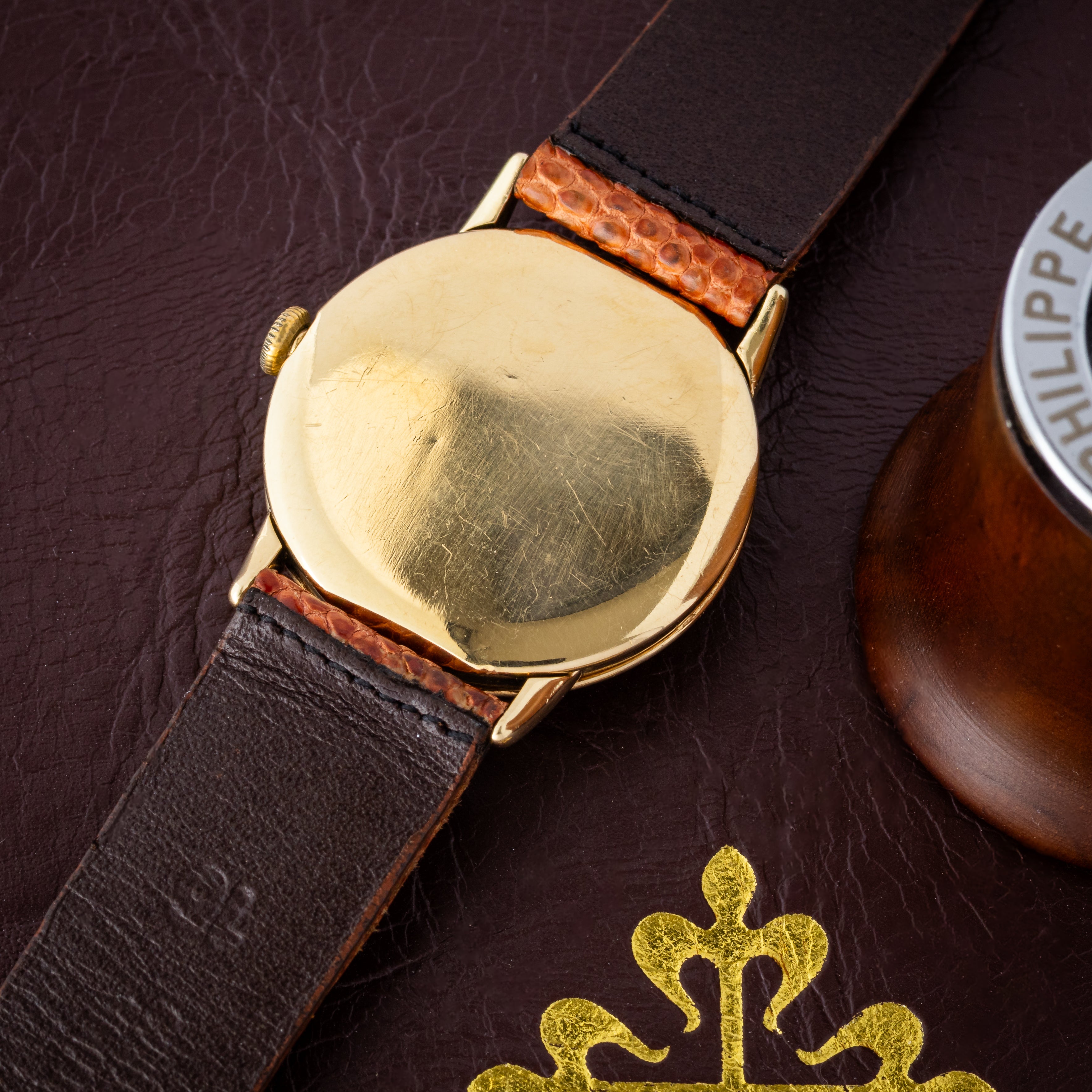
Fond clipsé (snap-on caseback)
Strap / Bracelet / Buckle
Brown lizard strap with gold-tone buckle, showing light wear consistent with use
Accompanied By
Presented with WRISTORIAN packaging
WRISTORIAN Perspective
The Ref. 1433 belongs to Patek Philippe’s most disciplined chapter — a period when refinement was measured not by scale or complication, but by proportion and coherence. Produced during years defined by global instability, these smaller Calatravas reflect a manufacture prioritizing continuity and balance over expansion.
What makes the 1433 increasingly compelling today is its refusal to conform to modern expectations of wrist presence. Its scale demands intention from the wearer. It is not a generalist reference, nor was it designed to be one. It represents an era when dress watches were intimate instruments — personal, discreet, and architecturally resolved.
The long “Patek Philippe & Co.” signature anchors the watch within a narrow historical window when typography still carried partnership-era language. For collectors attentive to these subtleties, such details signal historical placement without requiring explanation.
The caliber 9-90 further reinforces the reference’s integrity. Properly scaled and mechanically conservative, it reflects Patek Philippe’s commitment to proportion during a time when supply constraints could easily have encouraged compromise.
The present example should be evaluated through that lens of coherence. The clarity of its raised signature, the preservation of its dial architecture, and the structural integrity of its case allow the reference’s design discipline to remain legible. The movement and case components appear consistent with the era, supporting the overall alignment that defines stronger surviving examples. Within a category where proportion is the primary virtue, this example retains the compositional balance that gives the Ref. 1433 its enduring relevance.
What makes the 1433 increasingly compelling today is its refusal to conform to modern expectations of wrist presence. Its scale demands intention from the wearer. It is not a generalist reference, nor was it designed to be one. It represents an era when dress watches were intimate instruments — personal, discreet, and architecturally resolved.
The long “Patek Philippe & Co.” signature anchors the watch within a narrow historical window when typography still carried partnership-era language. For collectors attentive to these subtleties, such details signal historical placement without requiring explanation.
The caliber 9-90 further reinforces the reference’s integrity. Properly scaled and mechanically conservative, it reflects Patek Philippe’s commitment to proportion during a time when supply constraints could easily have encouraged compromise.
The present example should be evaluated through that lens of coherence. The clarity of its raised signature, the preservation of its dial architecture, and the structural integrity of its case allow the reference’s design discipline to remain legible. The movement and case components appear consistent with the era, supporting the overall alignment that defines stronger surviving examples. Within a category where proportion is the primary virtue, this example retains the compositional balance that gives the Ref. 1433 its enduring relevance.
Service & Operation
Service History
Service history unknown
Operational Status
Running and setting at the time of cataloguing
