
Patek - 2557J - Cadran noir
 Trusted Globally by Collectors
Lifetime Guarantee of Authenticity
Complimentary Fully Insured Shipping
Choisir les options
Timepiece Information
Patek - 2557J - Cadran noir
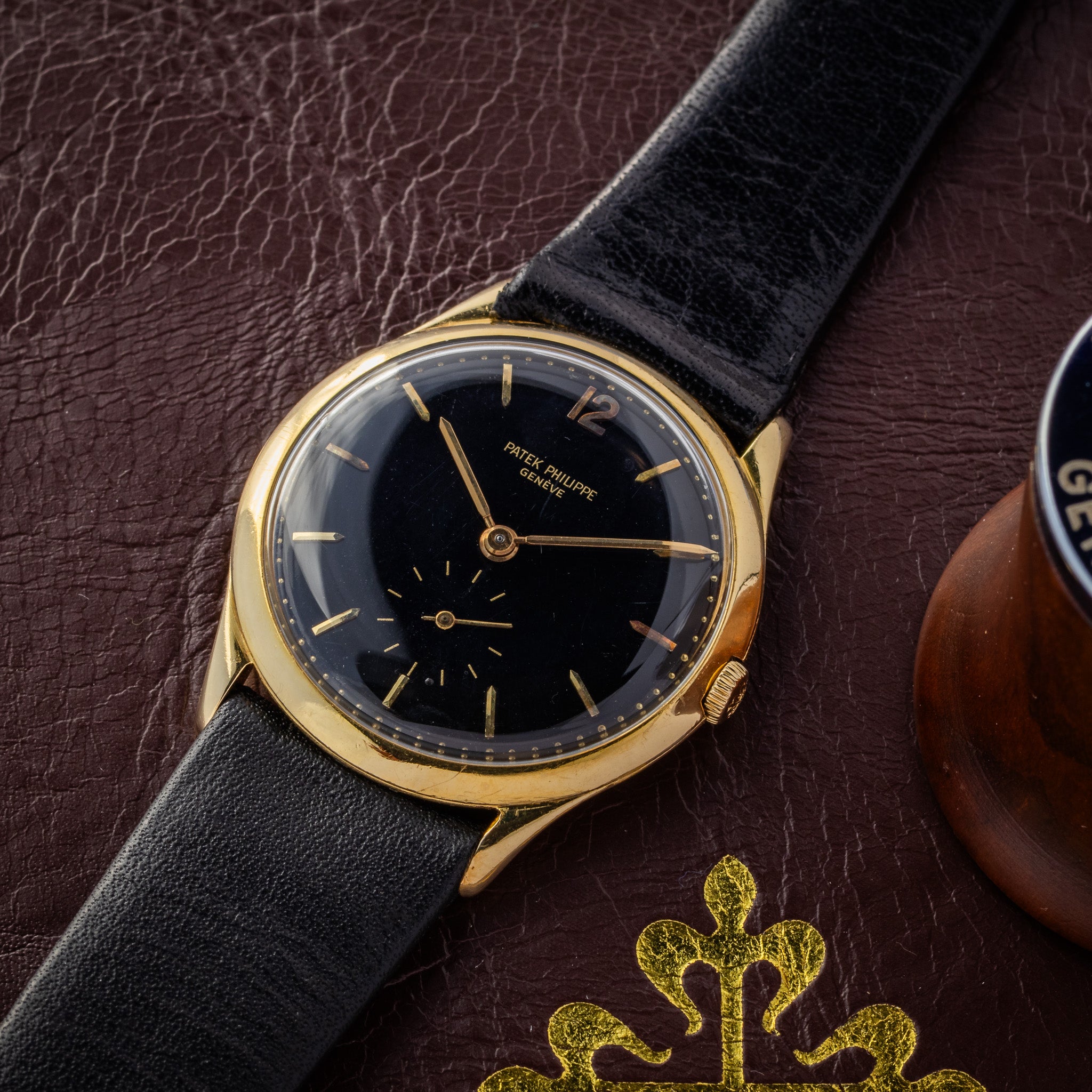
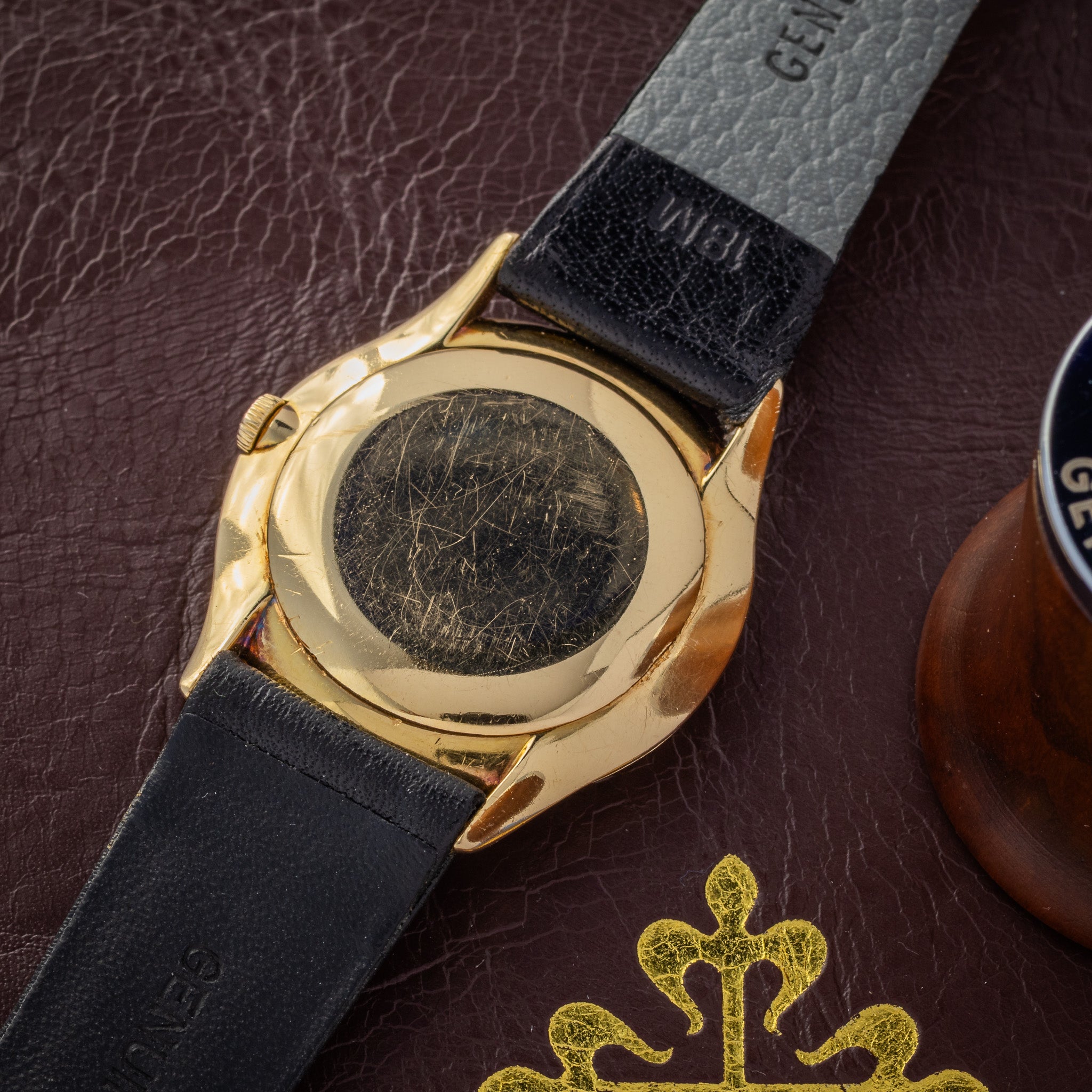
Vers 1955 · Boîtier n° 687.635 · Mouvement n° 743.583 . Heure uniquement. Ce modèle, choisi pour son équilibre entre originalité et authenticité, témoigne de l'attrait intemporel du design Patek Philippe du milieu du XXe siècle. Ses proportions harmonieuses épousent parfaitement le poignet, tandis que la finesse de la typographie du cadran et des finitions du boîtier souligne la quête discrète d'excellence de la manufacture. Les collectionneurs apprécieront la qualité des composants et l'élégance sobre qui le distingue des tendances éphémères : un objet fonctionnel sublimé par la forme. Sur le marché actuel, les connaisseurs recherchent ces pièces pour leur cohérence et la clarté de leur histoire : un garde-temps fonctionnel, préservé avec respect plutôt qu'avec ostentation. Adaptée à un usage quotidien ou à une étude approfondie au sein d'une collection spécialisée, elle offre à la fois une satisfaction esthétique et un potentiel de collection à long terme. Accompagnée d'un extrait.
At first glance the watch appears almost deceptively simple. Its modest diameter of just over thirty-two millimeters reflects the disciplined scale of the era, yet the elongated, slender lugs extend the visual footprint of the case, allowing the watch to sit confidently on the wrist. The result is a silhouette that feels far more contemporary than its dimensions might suggest. Combined with a notably thin profile of approximately 7.7 millimeters, the reference embodies the refined mechanical elegance that defined Geneva’s best dress watches of the period.
The true character of the present watch, however, lies in its dial. While most examples of the reference appear with traditional silvered surfaces, this example is fitted with a black dial confirmed by the Extract from the Archives. That detail transforms the personality of the watch entirely. Against the deep black ground, the applied yellow-gold markers and applied Arabic twelve stand in sharp relief, creating a striking interplay of light and contrast that feels both graphic and sophisticated. The delicate gold dot minute track and small seconds register add further nuance, producing a dial architecture that rewards prolonged attention without ever appearing ornate.
This contrast between restraint and visual strength is precisely what makes black-dial mid-century Patek Philippe watches so compelling to collectors. The darker surface lends the watch an unexpected modernity, emphasizing the geometry of the markers and hands while allowing the warm tone of the yellow-gold case to frame the dial with quiet authority. The result is a Calatrava that feels both classical and distinctive—familiar in its design language yet notably uncommon in its execution.
The movement within reinforces the watch’s refined character. Patek Philippe’s caliber 10'''200 represents one of the manufacture’s classic manually wound movements of the era, developed to provide dependable performance within an elegantly thin architecture. Its presence inside this case underscores the philosophy that defined Patek Philippe throughout the mid-twentieth century: excellence achieved through disciplined engineering rather than excess complication.
Today, watches like the Reference 2557 occupy an increasingly respected place within the broader landscape of vintage Patek Philippe collecting. They reflect a moment when the Calatrava concept had fully matured—when proportion, legibility, and mechanical refinement had been distilled to their purest expression. In a market often drawn toward larger or more complicated watches, pieces such as this remind collectors why the brand’s most enduring designs remain those defined by balance and restraint.
For the collector who appreciates the subtleties of mid-century Patek Philippe design, this example offers a particularly appealing combination: elegant case architecture, a beautifully thin manual-wind movement, and an archive-confirmed black dial that gives the watch a distinctive visual presence rarely encountered within the reference. On the wrist it is understated yet unmistakably refined—a watch that speaks not through spectacle, but through proportion, history, and enduring craftsmanship.

