
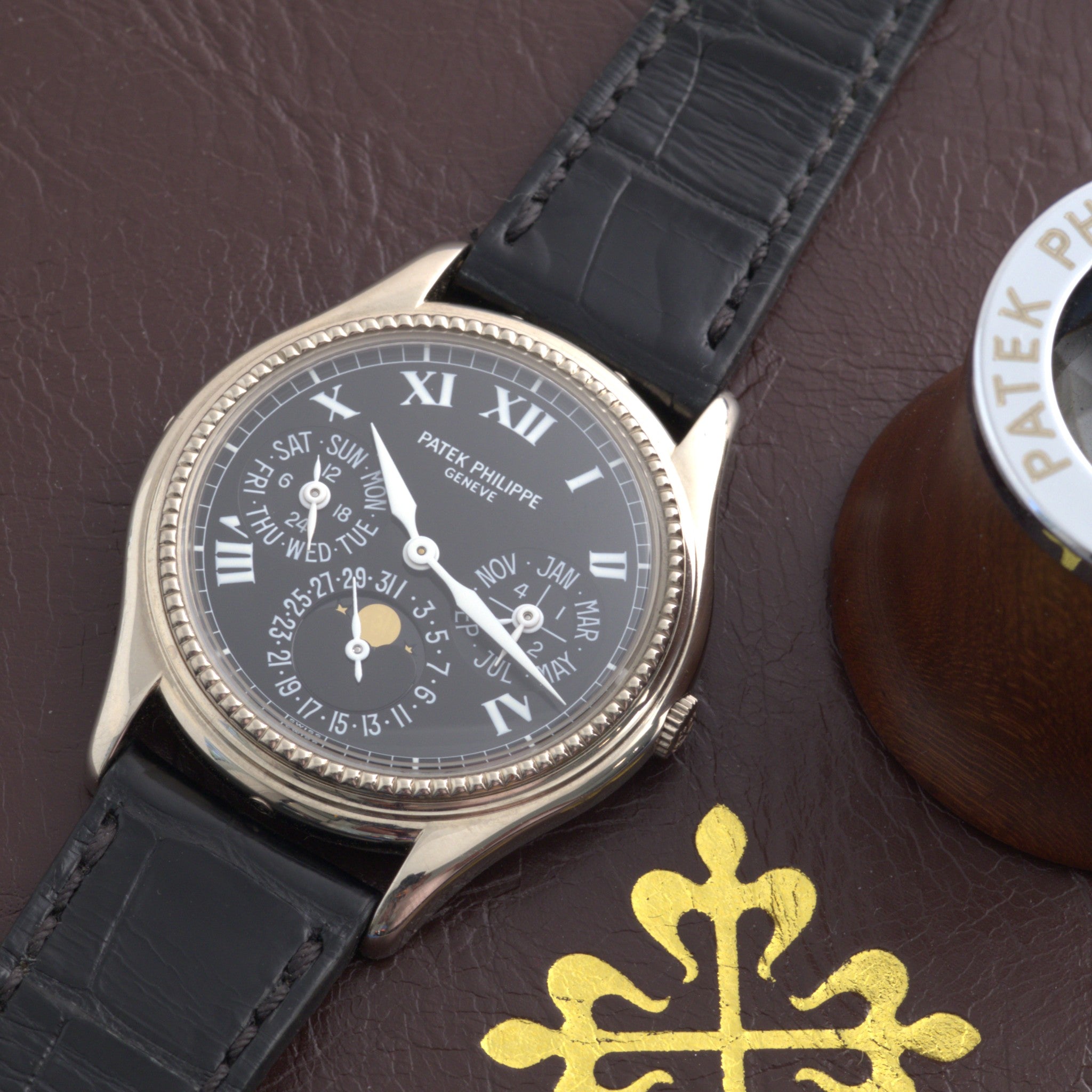
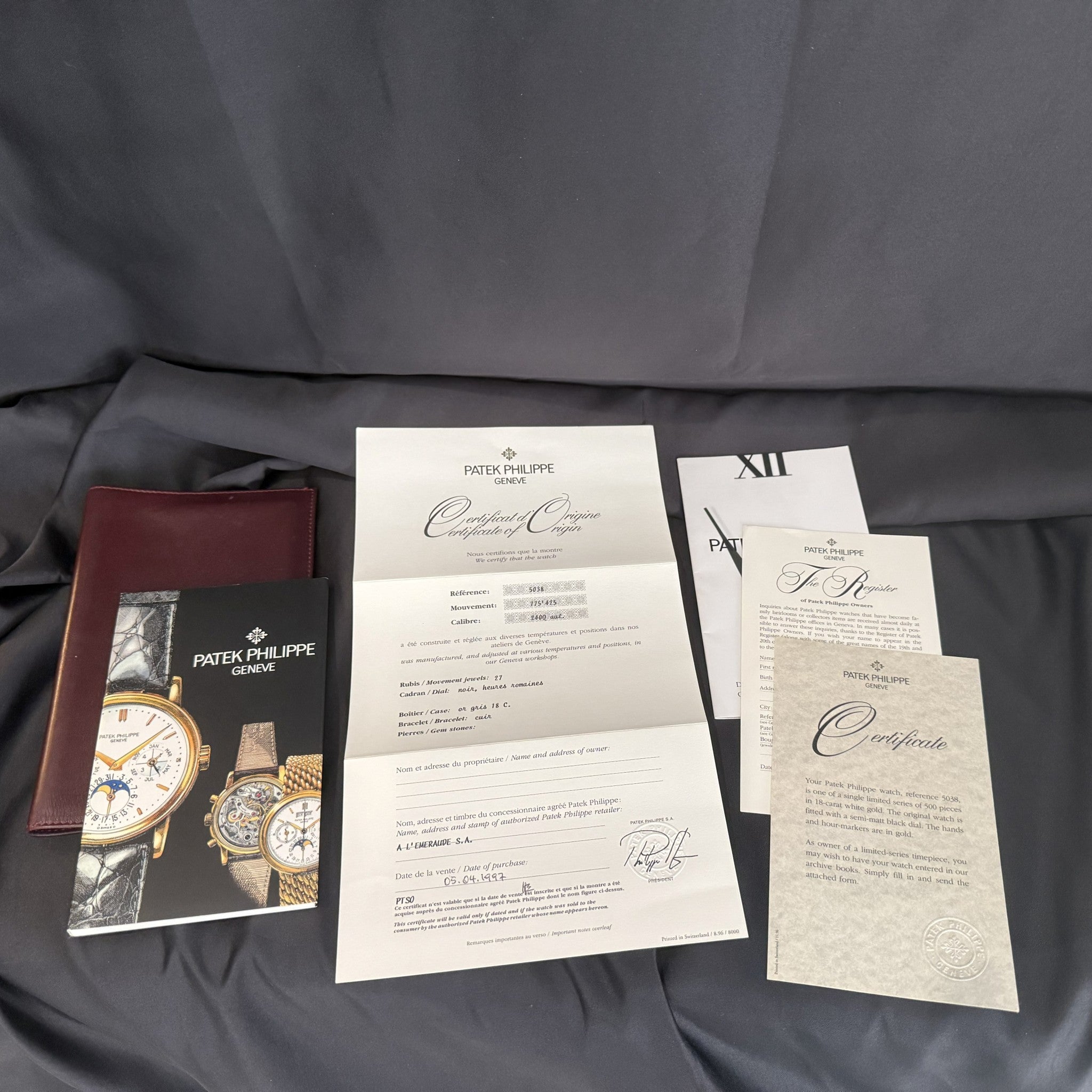
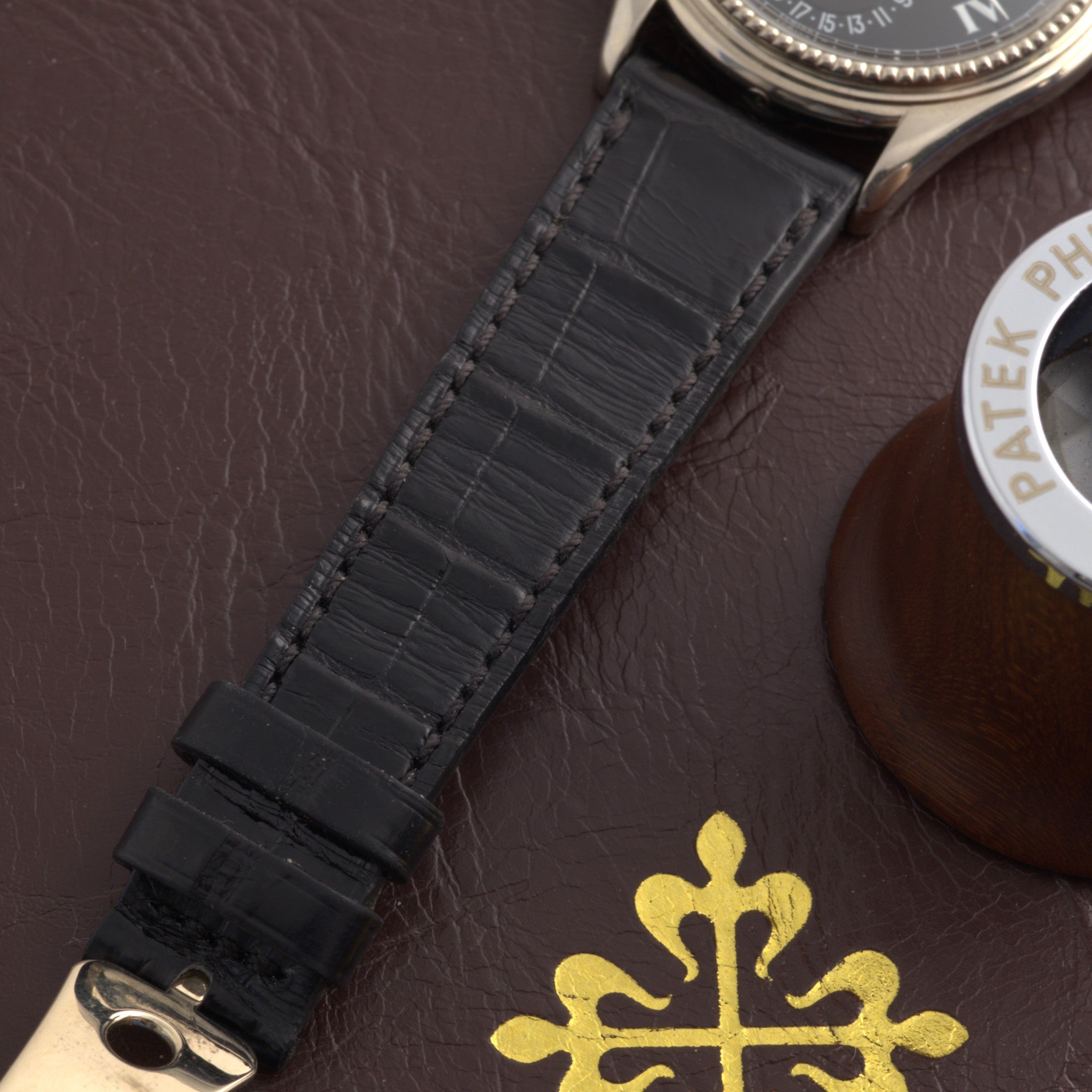
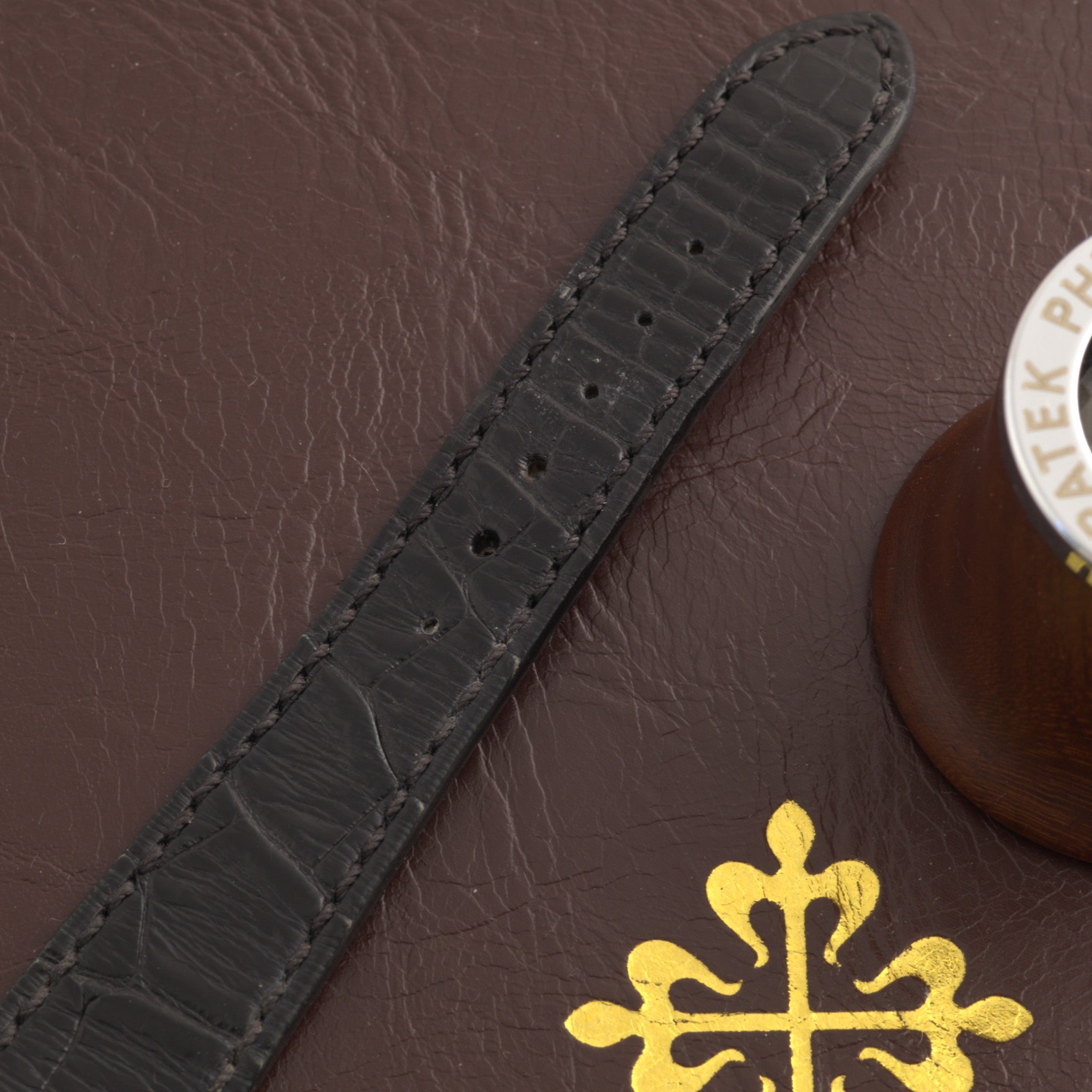
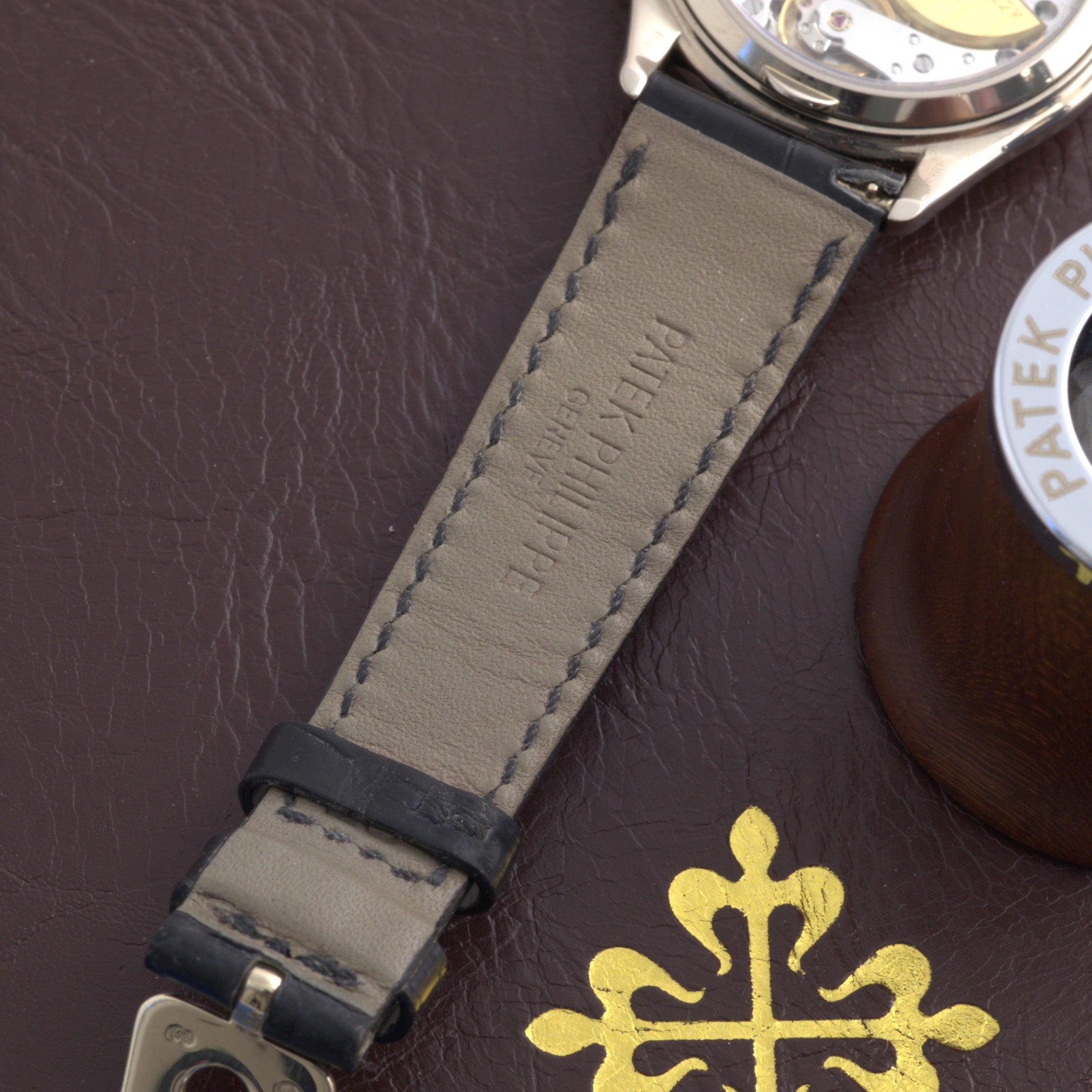
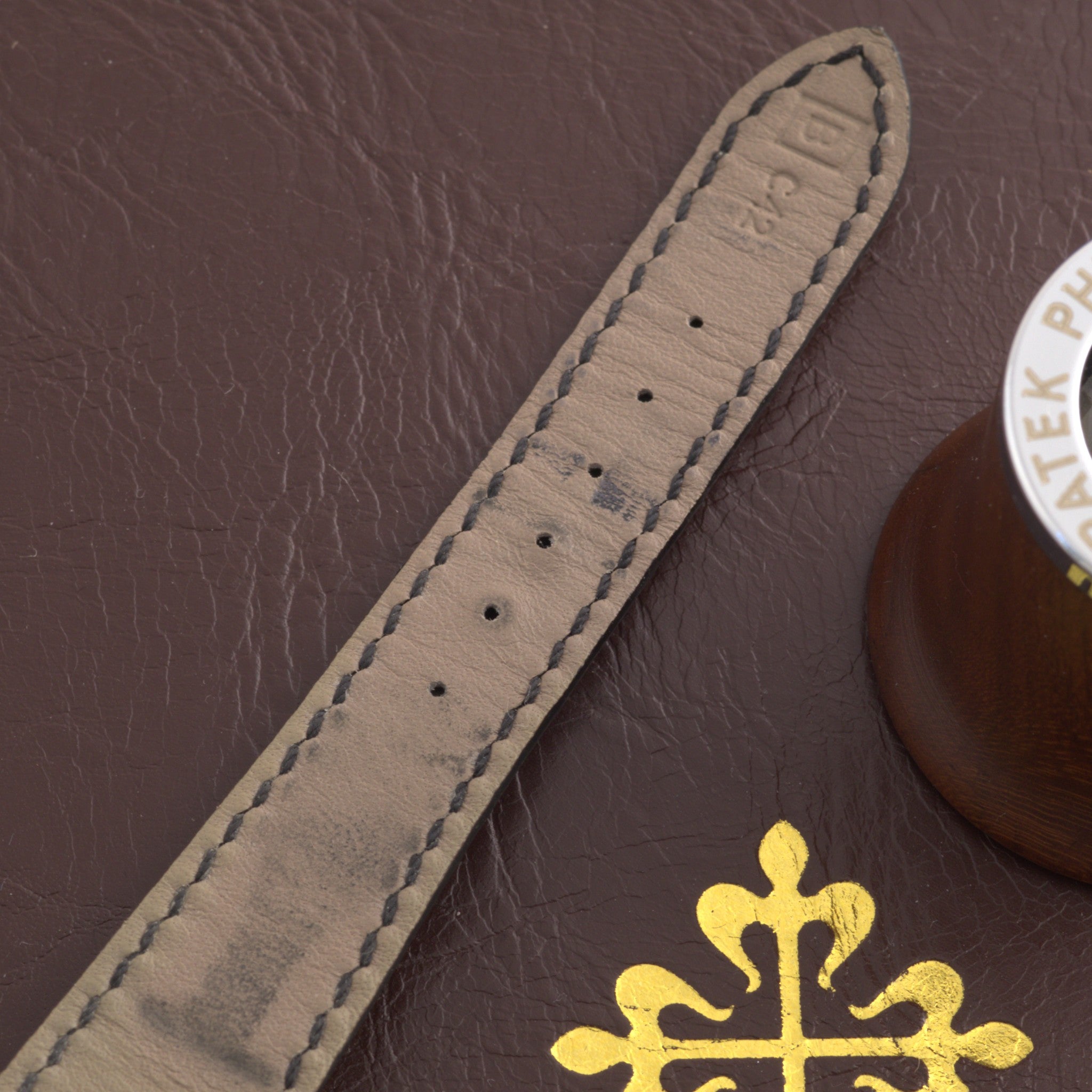


Introduced in 1996, Reference 5038G was produced as a limited edition of only 500 examples, all in 18K white gold. Closely related to Patek Philippe's celebrated Reference 3940, it retains the manufacture's elegant, ultra-thin perpetual-calendar architecture while presenting a distinctly more dramatic and uncommon aesthetic.
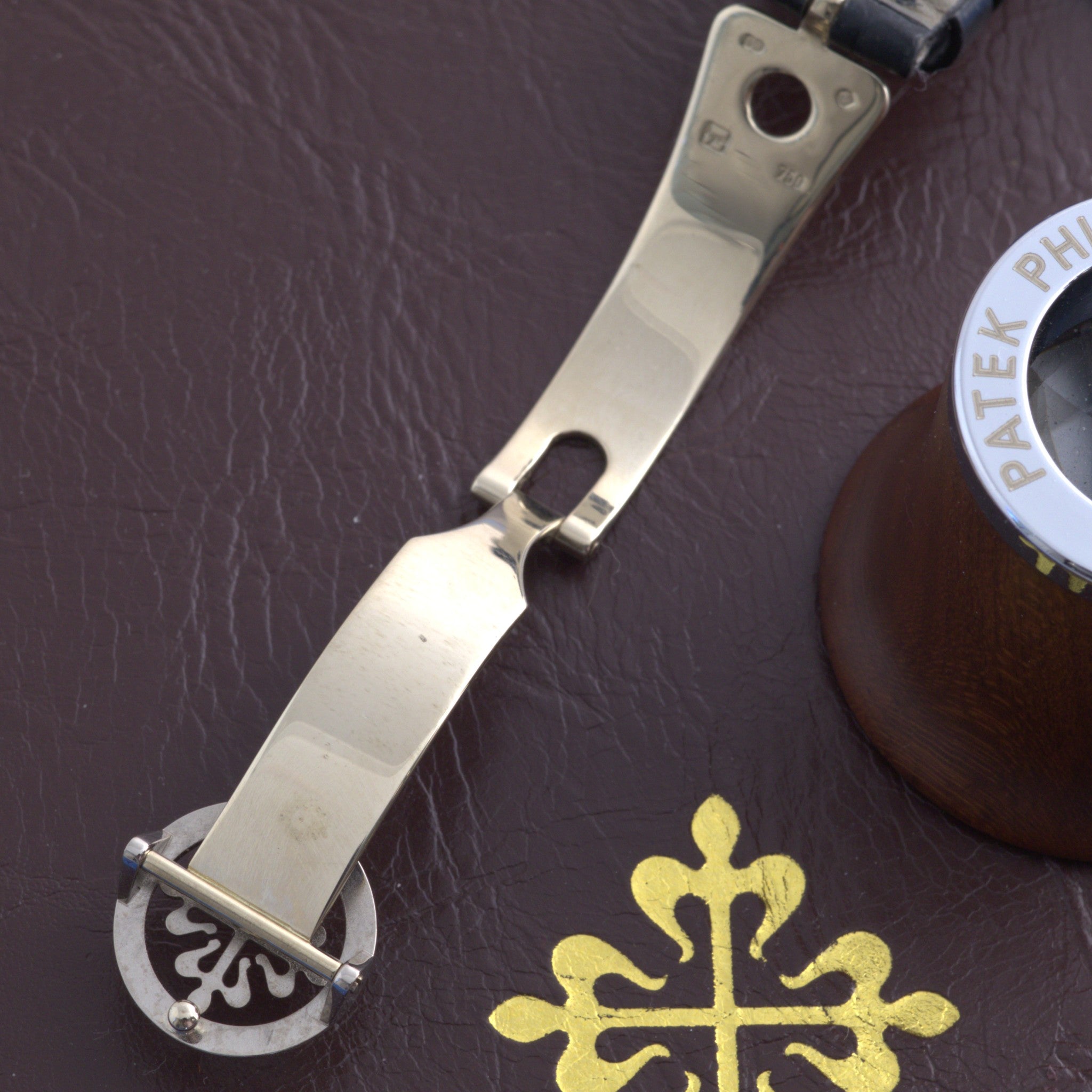
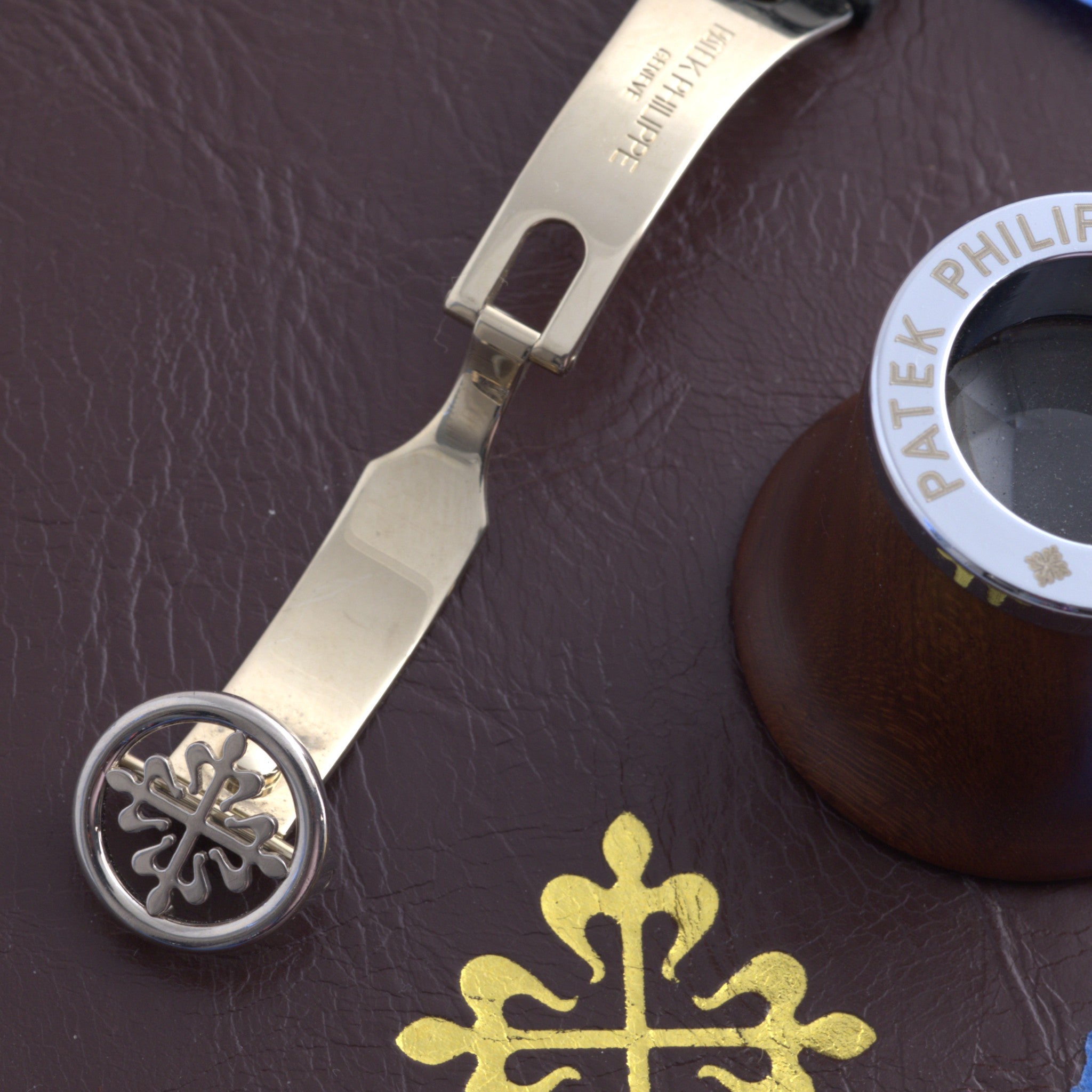
The 36 mm white-gold case is distinguished by a finely beaded and stepped Clous de Paris bezel, sculpted lugs and a sapphire-crystal display back. Its black lacquered dial features white-painted Roman numerals and the balanced three-register configuration associated with Patek Philippe's perpetual calendars of the period. The subsidiary displays indicate the day, date, month, leap-year cycle and 24-hour time, while the moon-phase aperture is integrated within the date register at 6 o'clock. Despite the amount of information presented, the dial remains orderly, legible and visually harmonious.
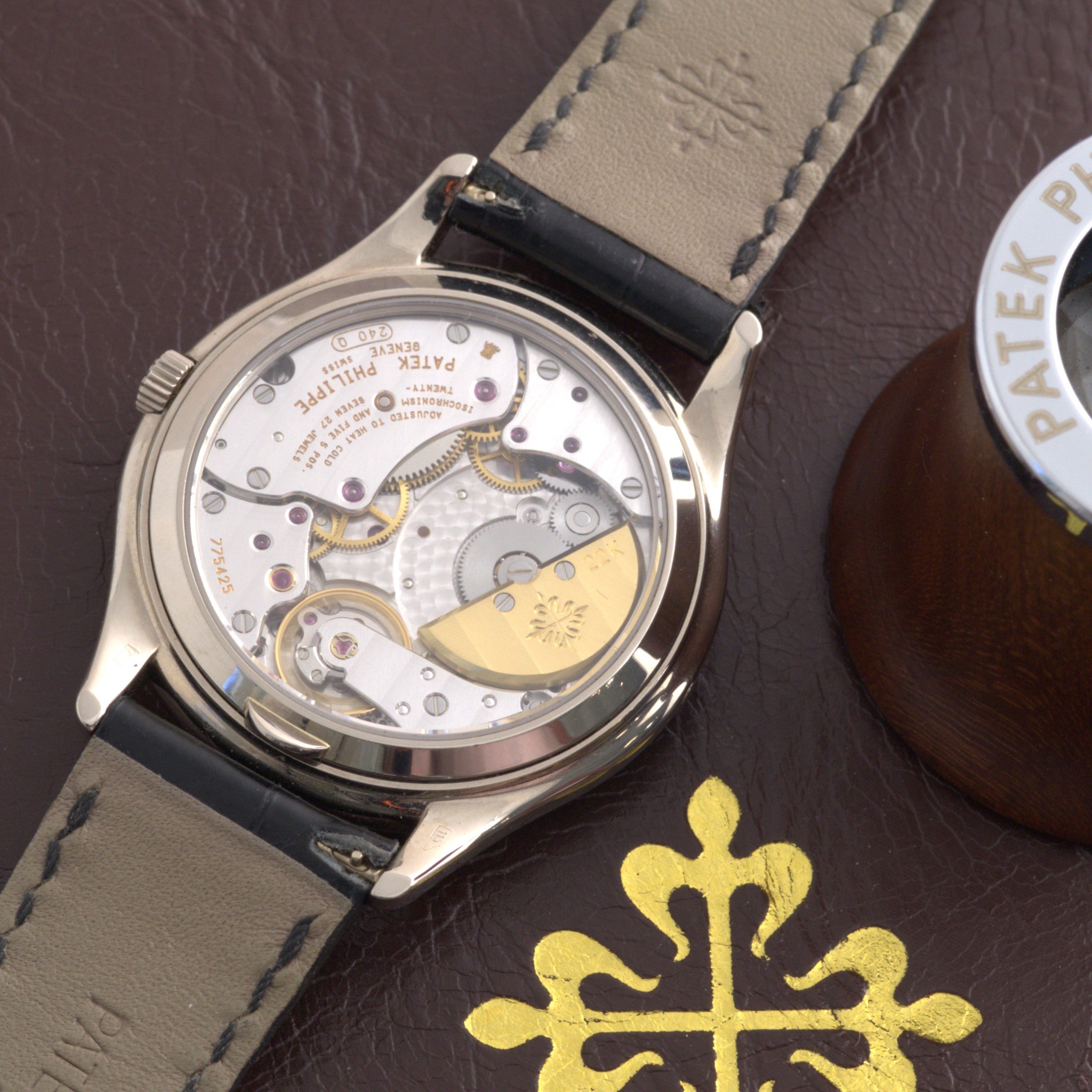
Power is provided by Patek Philippe's automatic Calibre 240 Q, a 27-jewel perpetual-calendar movement incorporating the manufacture's signature recessed micro-rotor. Its compact construction allows the watch to maintain the slim profile and refined proportions that define this important family of perpetual calendars, while the movement's architecture and finishing remain visible through the exhibition caseback.
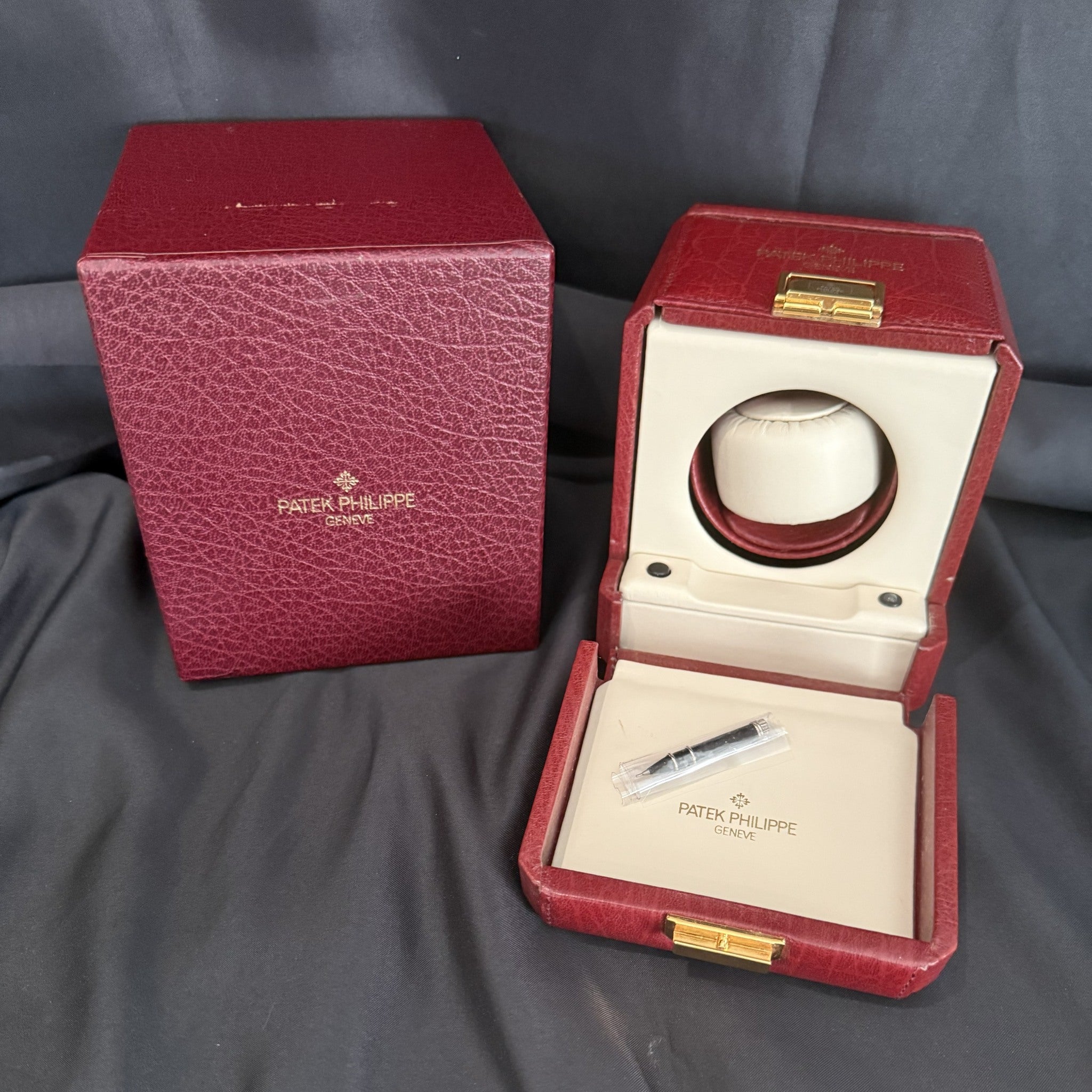
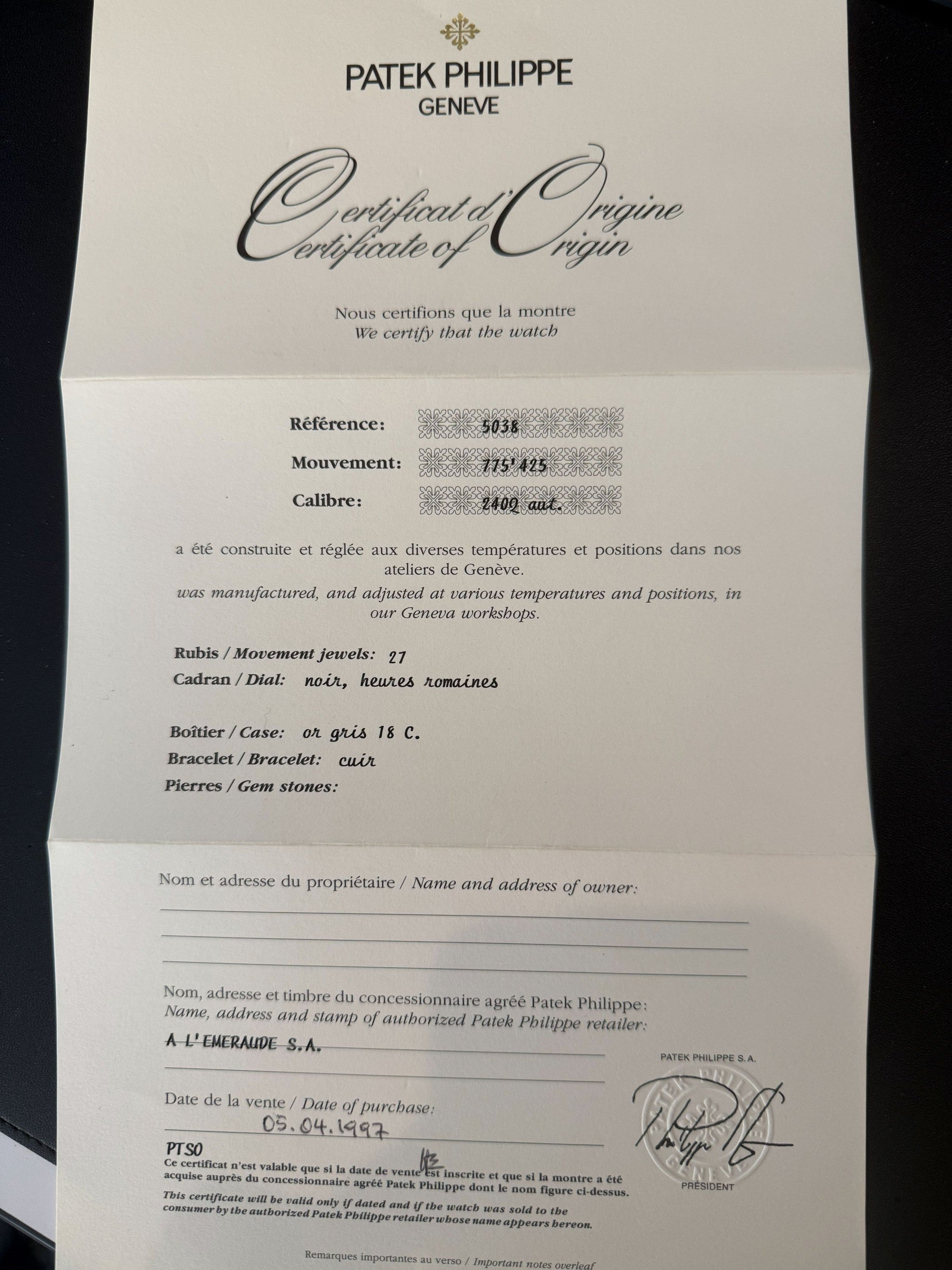
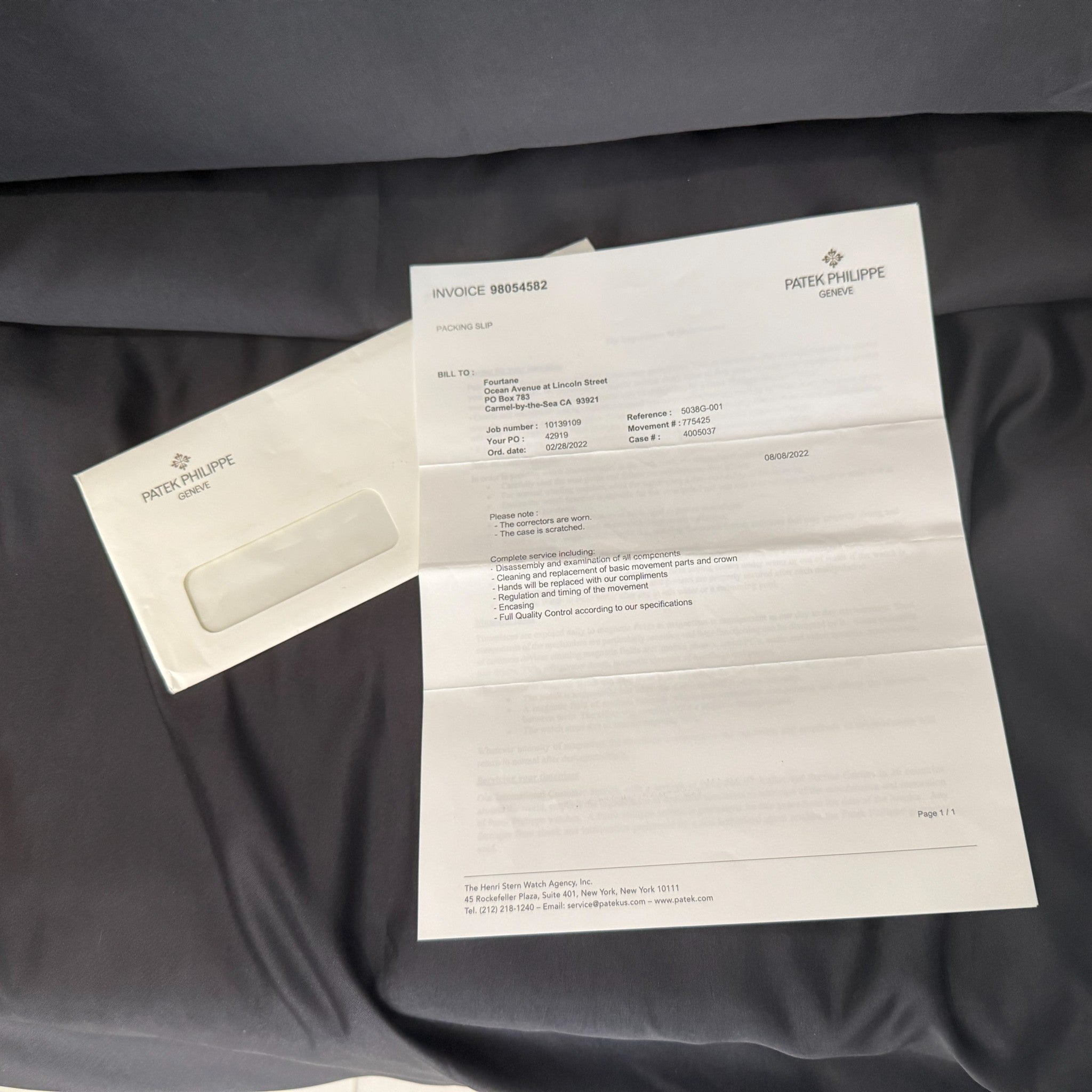
This example was originally sold on April 5, 1997 by A L'Emeraude S.A. It is accompanied by its original Certificate of Origin, separate limited-edition certificate, presentation winding box, outer box, leather document wallet, booklets, setting stylus and Patek Philippe service documentation recording a complete factory service performed in August 2022.
Condition: The watch presents in excellent overall condition. The white-gold case retains strong definition throughout, particularly in its sculpted lugs and finely beaded bezel, with light surface wear consistent with careful use. The black dial, contrasting Roman numerals, hands and subsidiary displays remain exceptionally well preserved and highly attractive. The watch is fully operational, and its perpetual-calendar functions were performing as intended at the time of cataloguing.
