
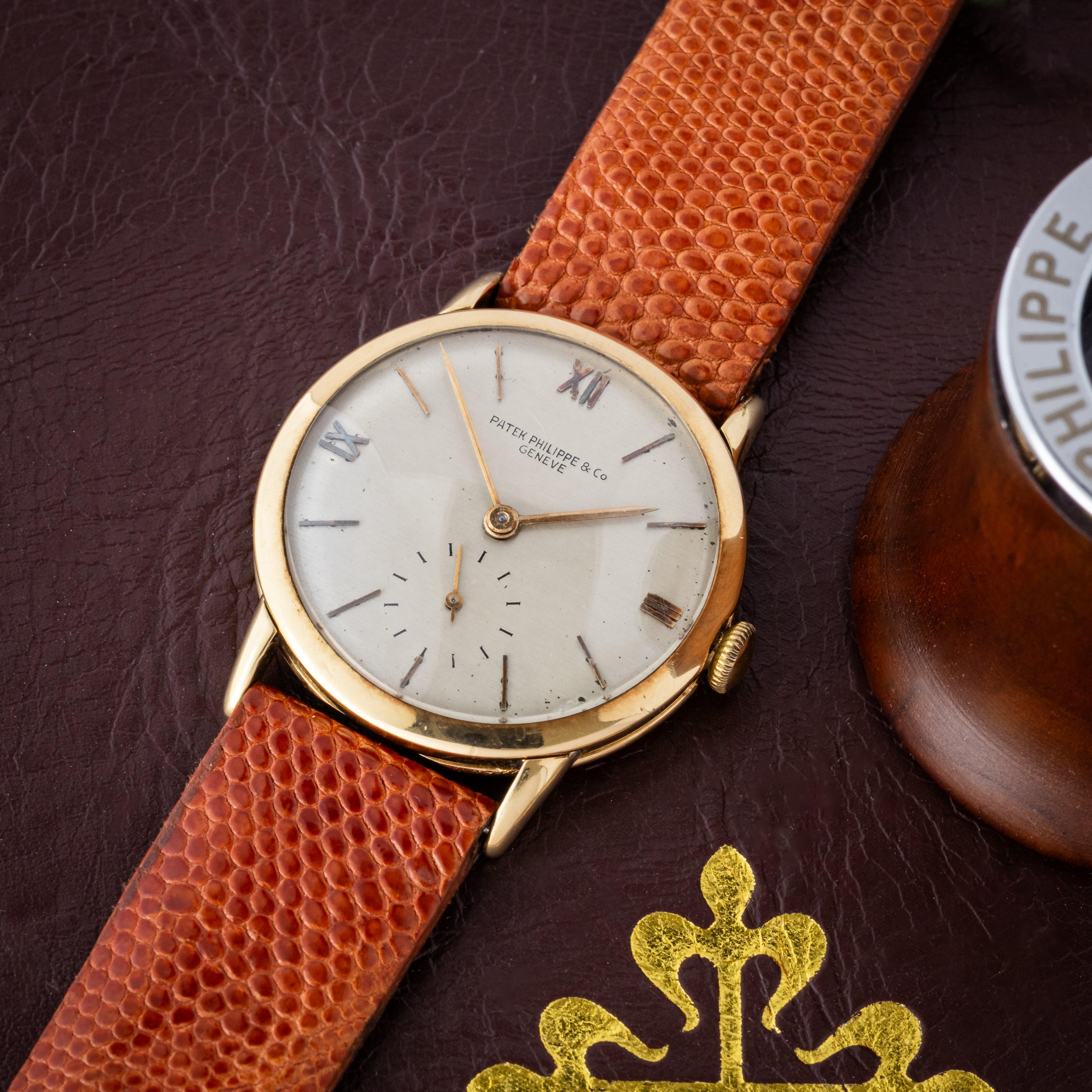
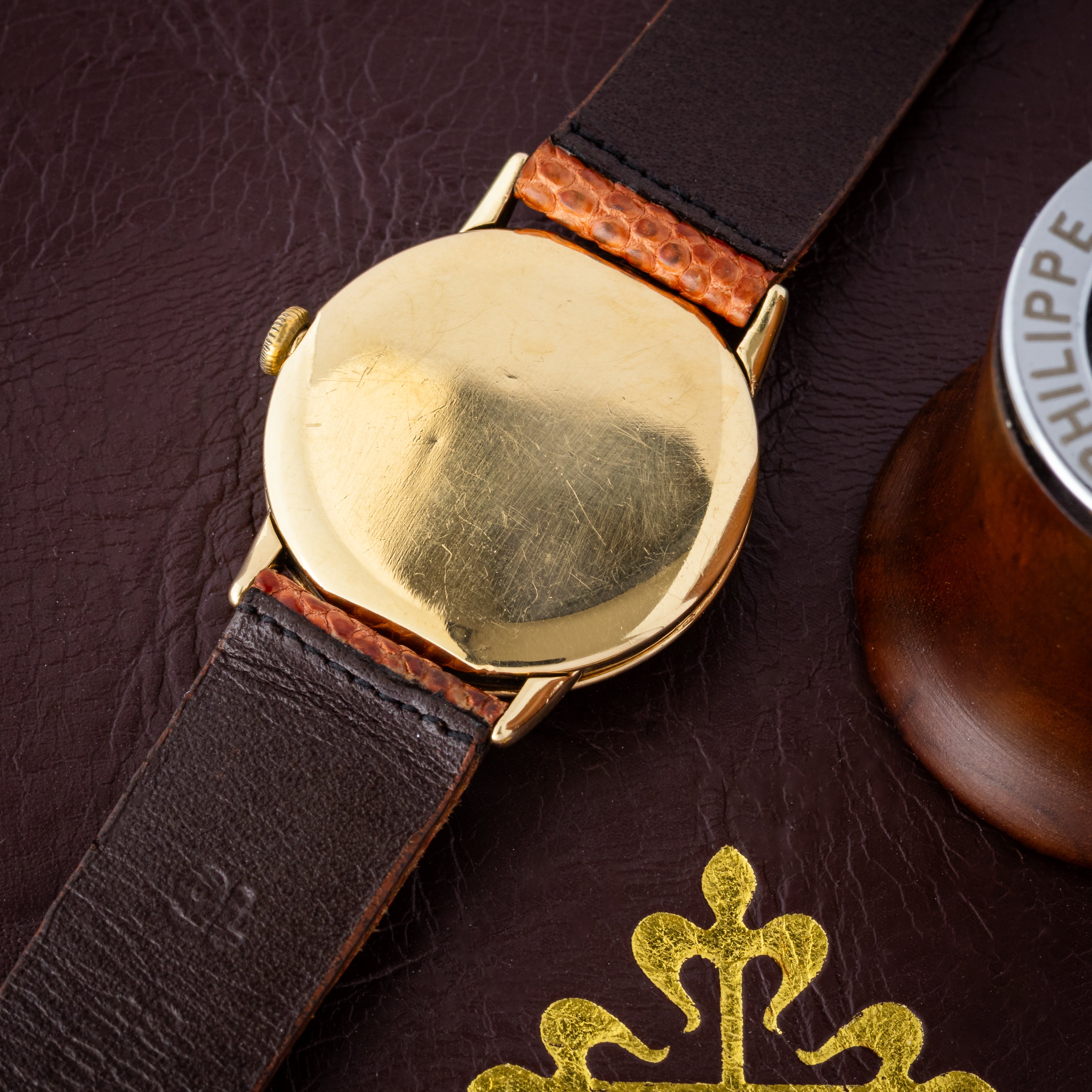
Patek - 1433J - Firma larga
 Trusted Globally by Collectors
Lifetime Guarantee of Authenticity
Complimentary Fully Insured Shipping
Elige opciones
Timepiece Information
Patek - 1433J - Firma larga
c. 1939-46? · Caja n.° 620.471 · Movimiento n.° 900.199 ( Solo hora). Un ejemplar cuidadosamente seleccionado por su equilibrio entre originalidad y honestidad, esta pieza refleja el atractivo perdurable del diseño de mediados de siglo de Patek Philippe. Sus proporciones se adaptan con elegancia a la muñeca, mientras que la fina tipografía de la esfera y el acabado de la caja subrayan la discreta búsqueda de la excelencia de la manufactura. Los coleccionistas apreciarán la integridad de sus componentes y la sobria elegancia que lo eleva por encima de la moda: un objeto funcional refinado en forma. En el mercado actual, los conocedores valoran estos ejemplares por su coherencia y la claridad de su historia: un reloj con propósito, conservado con respeto en lugar de excesos. Adecuado para uso diario o para un estudio minucioso en una colección selecta, ofrece satisfacción estética y un gran valor como pieza de colección a largo plazo. Incluye la opción de solicitar.
What makes the 1433 increasingly compelling today is its refusal to conform to modern expectations of wrist presence. Its scale demands intention from the wearer. It is not a generalist reference, nor was it designed to be one. It represents an era when dress watches were intimate instruments — personal, discreet, and architecturally resolved.
The long “Patek Philippe & Co.” signature anchors the watch within a narrow historical window when typography still carried partnership-era language. For collectors attentive to these subtleties, such details signal historical placement without requiring explanation.
The caliber 9-90 further reinforces the reference’s integrity. Properly scaled and mechanically conservative, it reflects Patek Philippe’s commitment to proportion during a time when supply constraints could easily have encouraged compromise.
The present example should be evaluated through that lens of coherence. The clarity of its raised signature, the preservation of its dial architecture, and the structural integrity of its case allow the reference’s design discipline to remain legible. The movement and case components appear consistent with the era, supporting the overall alignment that defines stronger surviving examples. Within a category where proportion is the primary virtue, this example retains the compositional balance that gives the Ref. 1433 its enduring relevance.

